
Reviewed · CITY WALKS IN VANCOUVER
Vancouver Old Town Treasure Hunt: Self-Guided Walking Game
Gastown turns into a puzzle as you walk. This self-guided smartphone treasure hunt has you hunting answers at major Old Town sights, following a step-by-step route with a story line inspired by Gold Rush-era themes.
I like that it’s a safe, low-stress way to explore on your own schedule, and the offline-friendly setup makes it easier to keep going without worrying about spotty data. One thing to consider: if you’re a group, you may need to plan around how many phones can handle the game at once.
In This Review
- Key things I’d watch for before you start
- Vancouver Old Town turns into a treasure hunt
- Price and time: why $7.20 is actually reasonable
- No live guide: good for independence, not for hand-holding
- The Questo app and offline play: how to keep the game moving
- Stop 1: Marine Building (Art Deco shipping-era Vancouver)
- Stop 2: The old Customs warehouse at Howe and Cordova
- Stop 3: Waterfront Station and CPR transcontinental trains
- Stop 4: The 1977 steam-and-whistle clock
- Stop 5: The Dominion building and Beaux-Arts showmanship
- Stop 6: Sun Tower and the World and Sun newspapers
- Stop 7: Sam Kee Building at Pender and Carrall
- Stop 8: Gassy Jack statue and the Gastown name
- Stop 9: Gaoler’s Mews and Vancouver’s first jail
- Stop 10: The Alibi and the modern community-food side of heritage
- What you’ll likely enjoy most (and why it works)
- Possible snags to plan for
- Who should book this (and who should skip it)
- Should you book the Vancouver Old Town Treasure Hunt?
- FAQ
- How long does the Vancouver Old Town Treasure Hunt take?
- What does it cost?
- Is there a live tour guide?
- Does the quest work offline?
- What’s included in the experience?
- Where does the tour start and end?
- What should I do if I get stuck on a clue?
Key things I’d watch for before you start
- Offline-friendly play means you can keep moving even when your signal gets weird.
- 14 puzzle challenges turn famous facades into something you actually look at closely.
- No live guide: the game does the teaching, so it works best if you’re okay reading on your phone.
- The route mixes landmark architecture with Gastown’s darker, real-world past.
- You’ll end near Maple Tree Square by Water Street, so you can tack on extra wandering afterward.
Vancouver Old Town turns into a treasure hunt
If you’ve ever done a classic walking tour and felt like you blinked and missed the best bit, this format helps. Instead of listening to a lecture, you scan your surroundings, spot clues, and answer puzzle questions that nudge you toward details you’d normally walk right past.
This is the kind of activity I’d call good “active downtime.” It gets you outside, gives you a reason to slow down, and keeps your brain busy while the city does its thing around you. The game is designed to be completed at a relaxed walking pace in about 90 minutes, and it’s set up to be paused and resumed whenever you want.
For value, $7.20 per person is the big headline. At this price, you’re not paying for a guide’s time—you’re paying for a well-priced way to use your phone to explore the downtown core and Gastown area with structure.
Price and time: why $7.20 is actually reasonable
At $7.20 per person for roughly 1.5 hours, this sits in the “you can’t mess it up” category. You’re buying:
- an app-driven route,
- 14 puzzle prompts, and
- story explanations tied to the landmarks you pass.
The time matters, too. Ninety minutes is long enough to connect the dots between neighborhoods and architecture, but short enough that you can still enjoy a meal, shop stop, or waterfront stroll afterward without feeling like you ran out of daylight.
And since it’s booked well in advance on average, it’s clearly something people treat as a dependable plan—especially when they want to fit Vancouver into a packed schedule.
More puzzles played out on Vancouver streets



No live guide: good for independence, not for hand-holding
This is a self-guided experience. There’s no live tour guide, so everything runs through the Questo app and the quest steps on your phone.
That’s a plus if you like exploring your own pace. You can pause and resume, and you can stop to check a shop window or take a quick photo when the mood hits.
It can be a drawback if you want a person to explain context on the spot. In places where you might want more detail, you’ll be relying on what the app tells you. The upside is that the app’s prompts push you to look closely at architecture and signage, not just walk through.
The Questo app and offline play: how to keep the game moving
The standout setup detail here is offline functionality. That means you’re not constantly fighting for signal while you’re trying to answer a question.
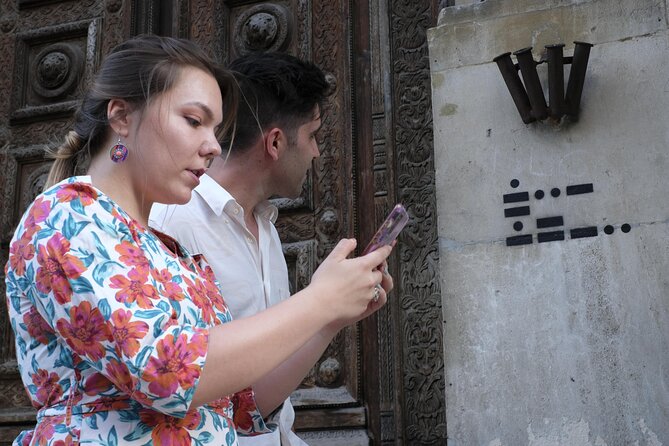
You’ll also get a mobile access code to start the quest. Once you’re in, the app provides step-by-step direction to the next location, with answers tied to what you can see around you.
One practical group tip: if you’re traveling with friends or family, agree on who holds the active phone. One phone can handle the game for the group, but trying to run it on multiple devices may cause friction. If you want to keep it smooth, plan as a single-team setup with one device doing the quest work.
Stop 1: Marine Building (Art Deco shipping-era Vancouver)
Your first stop is the Marine Building at 355 Burrard Street, built around 1929–30 and associated with Toronto’s short-lived Stimson Developers. It’s tied to commercial shipping interests and the Vancouver Merchants’ Exchange, and it’s considered Vancouver’s best surviving example of Art Deco style.
What I like about starting here: you get an instant sense of “this city meant business.” Before Gastown gets you into character, the Marine Building gives you a grand, polished foundation for your walk.
For the puzzle: you’ll need to look around to find the answer that moves you forward. That means you’ll naturally slow down at the building’s details instead of passing it by on the sidewalk.
Vancouver gives up more on foot. Other walks


Stop 2: The old Customs warehouse at Howe and Cordova
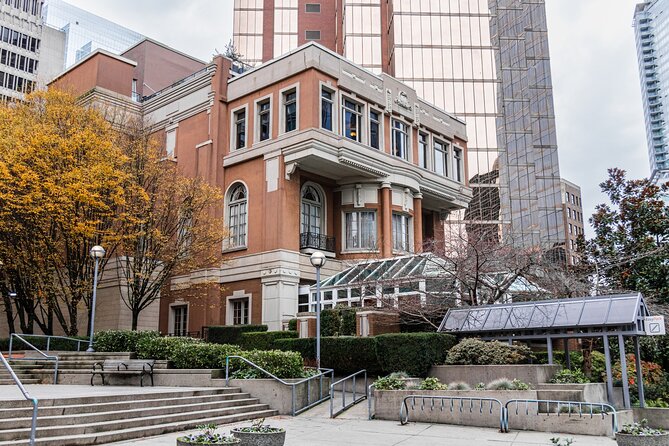
Next up, construction began in 1911 and wrapped in 1913 at the corner of Howe and Cordova. Designed by Public Works’ Chief Architect David Ewart, this building was built by the federal government to handle imported-goods needs, and it served as Customs until 1958.
This stop turns the spotlight to a different kind of heritage: not the fancy public face of a city, but the working infrastructure that made trade possible. You’ll be looking for a clue in the building environment to answer the challenge and move on.
Why it’s worth paying attention: it quietly explains why downtown Vancouver grew the way it did—through ports, paperwork, and the flow of goods.
Stop 3: Waterfront Station and CPR transcontinental trains
At Waterfront, you’re looking at a station built by the Canadian Pacific Railway (CPR) and opened August 1, 1914. It originally served as the Pacific terminus for CPR transcontinental passenger trains heading to Montreal and Toronto. The current station is the third CPR station at that site.
This is where the walk starts to connect to movement and migration—people, business, and the city as a gateway.
The game keeps you engaged by asking you to search for the answer in your surroundings. The practical takeaway: don’t rush past the station edges. Stand where the app tells you, take a second to visually scan the features, then tackle the puzzle.
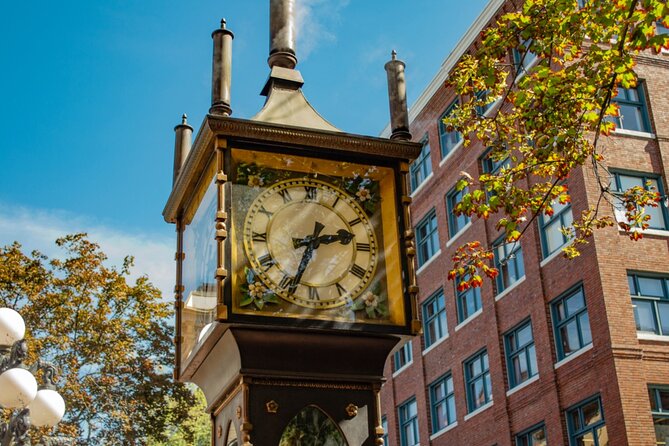
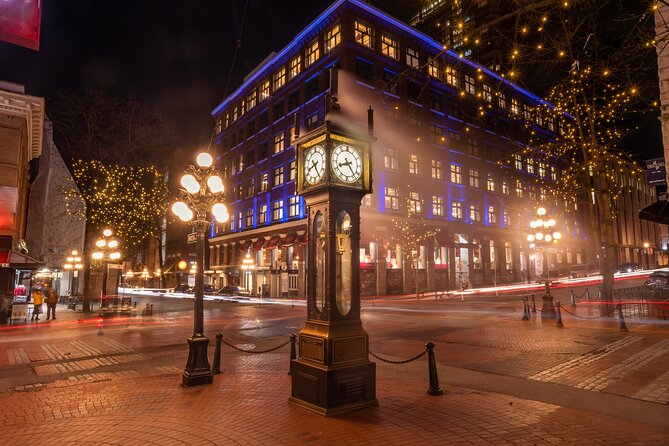
Stop 4: The 1977 steam-and-whistle clock
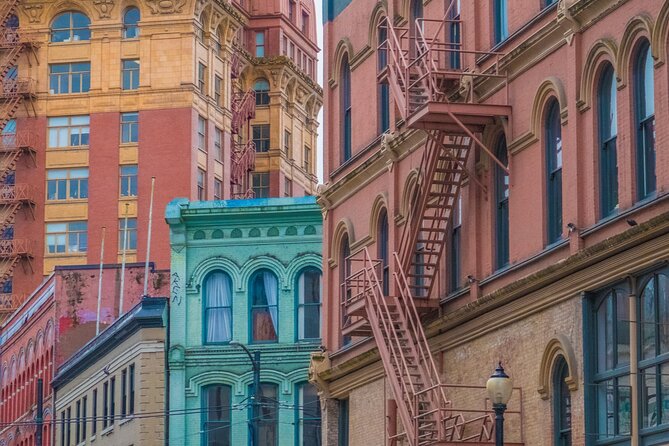
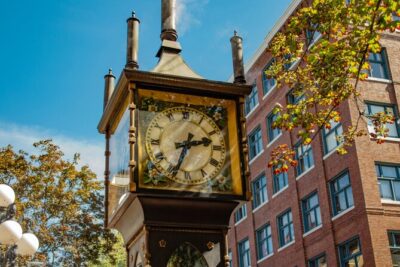
Built in 1977, this antique-style clock is powered by steam and whistles to tell time. It’s one of those details that can look like set dressing—until you realize it’s doing real work.
For puzzle hunters, this stop is fun because the “answer” likely isn’t about a tiny inscription only scholars would notice. It’s a visual landmark that helps you reorient and keep the hunt enjoyable.
If you like when the city feels a little theatrical, this is a nice breather in the middle of the route.
Stop 5: The Dominion building and Beaux-Arts showmanship
The Dominion building was built from 1908 to 1910 by J.S. Heyler. It’s known for its Beaux-Arts styling, including terracotta spandrels and Corinthian columns at the front entrance.
This is your “look up” moment. Beaux-Arts buildings love ornament, and the game’s prompt pushes you to actually study the facade instead of just clocking it as another downtown building.
One thing you’ll likely appreciate here: it’s a reminder that Vancouver’s early growth wasn’t only practical—it was also proud. Businesses and institutions wanted to project confidence.
Stop 6: Sun Tower and the World and Sun newspapers
The Sun Tower was built in 1911–1912. Its heritage value comes from its landmark architecture, its association with Louis D. Taylor, and the Vancouver World and Sun newspapers. It’s also tied to the expansion of the business district toward the eastern edge of downtown.
This stop is especially good if you like the way media shapes cities. Newspapers influenced what people talked about, bought, and believed. You’ll be hunting for an answer by looking around, so this becomes less of a “read a plaque” situation and more of a “spot the clue yourself” situation.
Stop 7: Sam Kee Building at Pender and Carrall
Built in 1913, the Sam Kee Building at Pender and Carrall is celebrated for architectural ingenuity and cultural significance to the Chinese community, plus the history of its namesake.
This is one of the moments where the route feels more than just a photo walk. Even without extra narration from a human guide, the app’s storyline and the landmark selection push you to see the neighborhood as cultural history, not only tourism scenery.
The puzzle here encourages you to notice features in the streetscape. If you’ve got even a mild curiosity about how communities built and branded their presence, this stop will land well.
Stop 8: Gassy Jack statue and the Gastown name
Now you reach the personality of Gastown: the statue is a monument to Gassy Jack Deighton, a Vancouver saloon owner in the 1860s. Gastown is named for Deighton.
The story also comes with modern re-evaluation, including his marriage to Quahail-ya, a 12-year-old Squamish girl, whose English name was Madeline Deighton.
This stop is a good reminder that local legends have complicated edges. The game format keeps things moving, but you still get a nudge toward asking bigger questions about who gets celebrated and why.
Stop 9: Gaoler’s Mews and Vancouver’s first jail
Inside Gastown, Gaoler’s Mews sits at the heart of the neighborhood. The first building on the site dates to the mid-1800s and housed Vancouver’s first jail. After it burned in Vancouver’s great fire of 1886, it was replaced by a brick fire hall.
This is a clever choice for a treasure hunt route, because it puts Gastown’s myth-making next to consequence. You’re walking among reminders that the city’s early days included harsh realities.
Again, the game prompts you to look around for the answer—so the stop becomes active. It helps you remember the site because you’re mentally connecting it to what you see right there.
Stop 10: The Alibi and the modern community-food side of heritage
The final stretch brings you to a heritage site erected over 100 years ago, positioned along the railyard near Vancouver’s trade and shipping ports. The Alibi has established itself as a place for neighbors and community, with food, beer, and culture.
Why this ending works: it ties the old and working parts of Vancouver to what’s happening now. Instead of treating heritage like a museum wall, the route ends at a place that’s part of daily life.
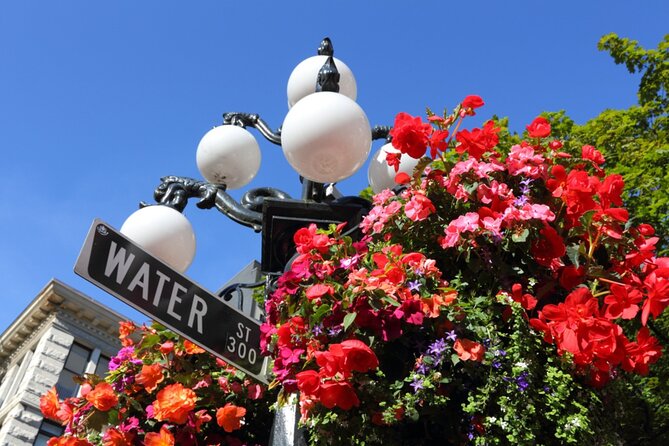
It’s also practical. You finish near Water Street at Maple Tree Square, which is a convenient launch point for grabbing a meal, finding a drink, or continuing your walk on your own.
What you’ll likely enjoy most (and why it works)
Here’s what stands out as the strongest parts of this type of tour.
1) Architecture you actually notice
The puzzles push you to look closely at details—Art Deco lines, newspaper-era associations, shipping-era infrastructure, and ornate Beaux-Arts frontage.
2) You control the pace
Being able to pause and resume keeps the game stress-free. If you want to stop for a quick snack, you can.
3) It’s budget-friendly
At $7.20, you’re paying for a structured walk that can replace a pricier guided tour when you just want movement plus meaning.
4) Group potential with the right setup
It can work well even if you’re traveling together. The key is planning for how many people will share one active device.
5) The hunt keeps you engaged
The game structure—14 puzzle-based challenges—turns the walk into something you do, not something you merely watch.
Possible snags to plan for
This isn’t a “set it and forget it” app experience. Here are the most realistic issues based on the available details:
- Downloading and device sharing: if you have multiple phones in the group, you might run into trouble getting everyone set up quickly. If your goal is a smooth walk, use one phone for the quest.
- Getting stuck on a clue: one clue may feel like a dead end at first. The good news is that hints are available, and you can use the skip option if needed.
- Riddle strength varies along the way: some puzzle prompts can feel weaker mid-route than the more location-tied moments. If you’re the kind of person who loves spotting physical details, you may prefer the stops where the clue is clearly grounded in what’s around you.
Who should book this (and who should skip it)
Best fit:
- Couples, friends, or small groups who like self-directed exploring.
- People who enjoy puzzles and want a reason to look at buildings closely.
- Travelers who want a structured walk without paying for a live guide.
- Anyone who benefits from offline-friendly navigation while sightseeing.
Maybe not ideal:
- If you hate app-based learning and want human explanations.
- If your group expects every person to use their own phone for the quest at the same time.
Should you book the Vancouver Old Town Treasure Hunt?
Yes, if you want a cheap, active, no-pressure way to see downtown landmarks and Gastown with built-in prompts. At $7.20 and about 90 minutes, it’s a smart add-on for almost any Vancouver plan—especially if you like discovering city details at your own speed.
Skip it only if you’re looking for a guided, narrative-heavy experience with lots of human context. This is best when you’re happy letting the app guide you and letting the street scene do the rest.
If you’re flexible, bring one phone for the group, take your time at the Art Deco and station stops, and use hints or skip if a clue gets stubborn. You’ll finish with a walk you can remember—and architecture you’ll actually recall.
FAQ
How long does the Vancouver Old Town Treasure Hunt take?
It takes about 1 hour 30 minutes on average.
What does it cost?
The price is $7.20 per person.
Is there a live tour guide?
No. It’s a self-guided smartphone game, so there’s no live guide.
Does the quest work offline?
Yes. The tour highlights note offline functionality, which makes it more accessible.
What’s included in the experience?
You get a mobile access code to the quest, 14 puzzle-based challenges, a storyline inspired by Vancouver’s Gold Rush history, and the ability to pause and resume.
Where does the tour start and end?
It starts at 355 Burrard Street, Vancouver and ends at Maple Tree Square, 1 Water Street, Vancouver.
What should I do if I get stuck on a clue?
The experience includes hints, and you can use a skip option if you need to move past a tough puzzle.
The Wider Vancouver Shelf
- Vancouver Half-Day Whale Watching Adventure with Free Photos★ 5.0 · 5,000 reviews
- Big Bus Vancouver Hop-On Hop-Off Sightseeing Tour★ 3.5 · 3,028 reviews
- Victoria & Butchart Gardens Tour with Ferry from Vancouver★ 4.5 · 2,703 reviews
- Vancouver: Covered Whale Watching Adventure with Free Photos★ 4.8 · 2,260 reviews
Sidewalk Miles in Vancouver
- Gastown Historic Walking Food Tour★ 5.0 · 1,863 reviews
- Vancouver Lost Souls of Gastown Walking Tour★ 5.0 · 1,273 reviews
- A Wok Around Chinatown: Culinary and Cultural Walking Tour Led by a Chef★ 5.0 · 610 reviews
- The Forbidden Downtown and Gastown Walking Tour★ 5.0 · 476 reviews
Games Played on City Blocks
- Vancouver City Sightseeing Adventure: spy game Secret Mission★ 4.5 · 23 reviews
- Foxtrail Scavenger Hunt – Amphibious Trail Vancouver★ 4.5 · 17 reviews
- Foxtrail Scavenger Hunt – Compass Trail Vancouver★ 4.5 · 14 reviews
- Private Vancouver Sightseeing Adventure: spy game Secret Mission★ 5.0 · 9 reviews
Just Reviewed in Vancouver
- Private Transfer from Vancouver Airport to Cruise Terminal (Port)
★ 5.0 · 3 reviews - Private Chauffeured Airport to Whistler Transfer (YVR – Whistler)
★ 3.5 · 3 reviews - Experience the Beauty of Vancouver’s Forests by Bike/E-Bike
★ 5.0 · 3 reviews - Banff, Moraine Lake, Lake Louise and Columbia Icefield 4 Day Tour
★ 4.5 · 3 reviews - Arrival Transfer: Vancouver Airport YVR – Vancouver by Luxury SUV
★ 5.0 · 3 reviews - Vancouver Waterfront Guided Bike/E-Bike Tour
★ 5.0 · 3 reviews
City Walks in Vancouver, compared.
 ★ 5.0Gastown Historic Walking Food TourFrom $1161,863 reviews
 ★ 5.0Vancouver Lost Souls of Gastown Walking TourFrom $291,273 reviews
 ★ 5.0A Wok Around Chinatown: Culinary and Cultural Walking Tour Led by a ChefFrom $122610 reviews
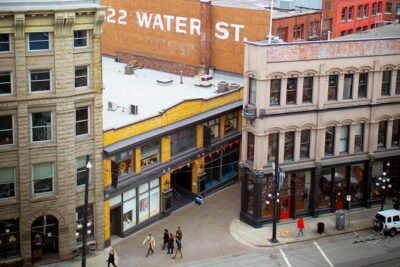 ★ 5.0The Forbidden Downtown and Gastown Walking TourFrom $29476 reviews
 ★ 4.5Gratuity-Based Vancouver City Highlights 3 Hour Walking TourFrom $5320 reviews
 ★ 5.0Ancient Trees of Vancouver Walking TourFrom $56225 reviews
 ★ 5.0Vancouver Secrets of Stanley Park Walking TourFrom $29208 reviews
 ★ 5.0Experience Gastown Vancouver’s Elite Walking Food TourFrom $80134 reviews
Browse the lists this tour appears in