
Reviewed · WHALE WATCHING FROM VANCOUVER
Wild Whale Watching Experience – Open Air Vessel
Whale sightings can change by the minute. I like how this trip from Granville Island pairs real-time searching with a marine naturalist’s guidance, plus a boat that can legally get closer to wildlife than many vessels. The result is the kind of watch-and-learn outing where the science matters, not just the spotting.
Second, I love the comfort setup. On the Eagle Eyes open-air vessel, you get a full-length anti-exposure suit and an all-around view, so you spend less time huddling and more time watching.
One thing to think about: your time on the water can stretch to about five hours, so you should plan for longer waits between big whale moments.
In This Review
- Key things that make this whale watch worth your time
- Granville Island launch: how your whale hunt actually plays out
- Eagle Eyes open-air comfort: 360° views without the “freeze and miss it” problem
- What you might see: whales plus the local supporting cast
- Marine naturalist guidance: turning a sighting into a story
- Small onboard extras that make a cold-weather difference
- How the timing feels: why up to five hours still works
- Price and value: what $169.74 is buying you
- Weather, waves, and who should think twice
- Who this whale watch fits best
- Should you book this Wild Whale Watching Vancouver tour?
- FAQ
- How long is the whale watching experience?
- Where does the tour start from?
- What is the price per person?
- What animals are you looking for?
- What does the open-air boat experience include?
- What help is provided for motion sickness?
- Is there anything you should bring?
- Is the tour suitable if I have neck problems?
- What happens if weather is poor?
- Can I cancel and get a full refund?
Key things that make this whale watch worth your time
- 360° viewing on Eagle Eyes means you’re not stuck craning in one direction when something surfaces.
- Anti-exposure flotation suits included help a lot if it’s cold, breezy, or damp out.
- Marine naturalist guidance plus whale-ID guides gives you better odds of understanding what you’re seeing.
- Legal approach rules can put you closer for more memorable encounters (within wildlife-safe limits).
- Onboard education links to conservation through data and research initiatives tied to local waters.
- Simple motion-sickness helpers like ginger candy and ear plugs can make the ride more comfortable.
Granville Island launch: how your whale hunt actually plays out
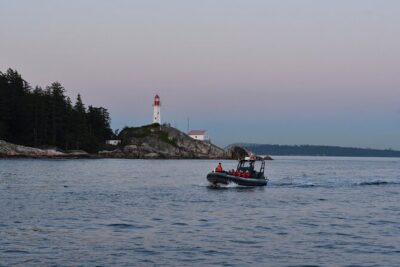
Your day starts at 1806 Mast Tower Ln, Vancouver, near public transit. From there, you head out from historic Granville Island, and you’ll quickly get that “Vancouver from the water” perspective shift. Early on, it’s not just about whales yet; it’s the thrill of watching the coastline slide past with the city layered in.
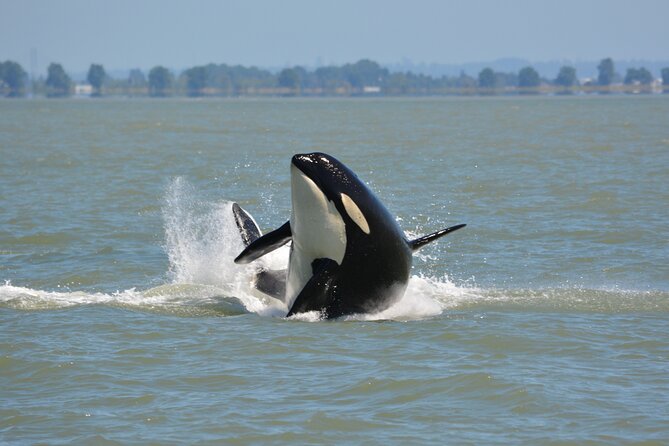
Once you’re moving along English Bay and into the Strait of Georgia, the search starts in earnest. This is where timing matters. You’re out to look for orca (killer whales), humpback, minke, and/or grey whales, but the experience doesn’t feel like a check-list hunt. It’s more like being on the water with people who know how to read the scene—where animals tend to show up, and when the best chances line up.
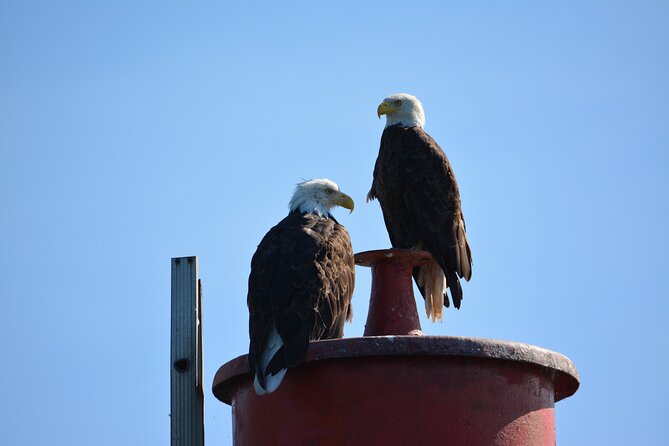
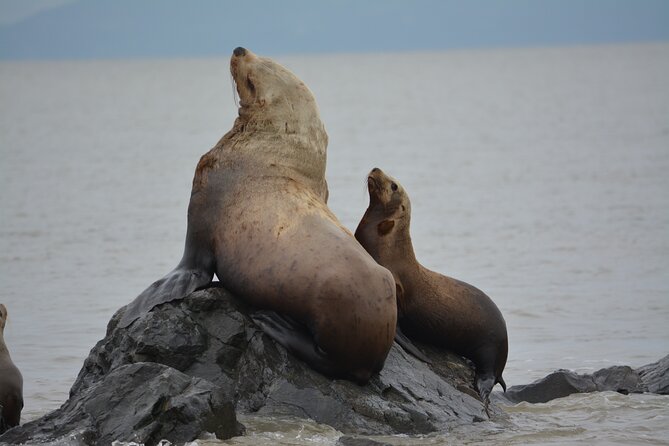
You also won’t miss the smaller, frequent sightings. The cruise is set up to scan for Steller and California sea lions, harbour or Dall’s porpoises, harbour seals, and bald eagles, plus seabirds like great blue herons. That matters because even on a day with minimal whale action, you’re still likely to see plenty of wildlife behavior worth watching.
Eagle Eyes open-air comfort: 360° views without the “freeze and miss it” problem
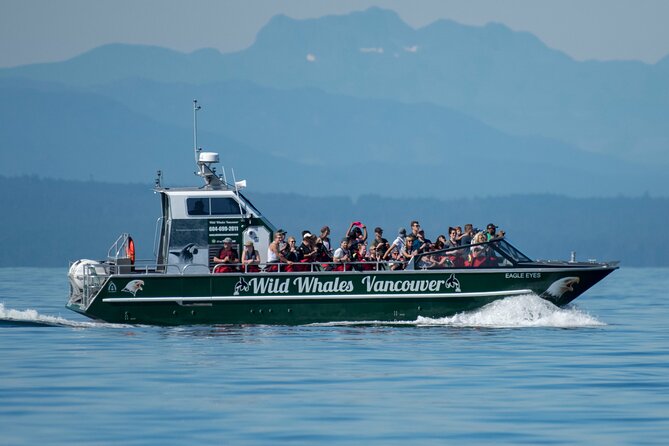
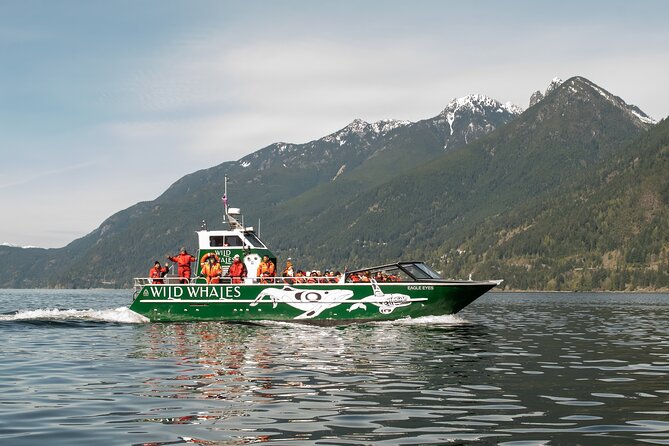
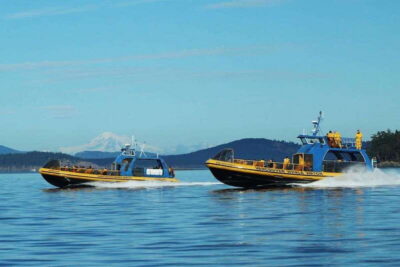
The vessel is Eagle Eyes, and the big deal is the open-air setup. You get a full 360° view of the surrounding water, which changes your odds. When you only have a forward-facing seat, wildlife can pop up behind you at the worst moment. With Eagle Eyes, you’re set up to track movement naturally.
Cold and spray are real in Vancouver water conditions, so I’m glad the suit is included. You’ll get a full-length, one-piece anti-exposure flotation suit to wear over your clothes. In practical terms, this is the difference between watching wildlife through your scarf and watching it properly with stable visibility.
You should still dress like you expect wind. Bring layers you can move in, and wear warm socks and gloves if you own them. The suit helps a lot, but it doesn’t replace a good base layer when the weather turns.
One more comfort bonus: there’s a restroom on board, which is a genuinely helpful thing when your trip can run near the full length. That lets you stay focused on spotting instead of constantly planning around stops.
Orcas do not keep schedules. More sailings that find them
What you might see: whales plus the local supporting cast
This is a real wild-water tour, so your exact sightings vary. The point is that you’re not just chasing whales in theory—you’re also scanning for the animals that share the ecosystem and show patterns around them.
Here’s what the crew looks for, with an eye toward how you might recognize them:
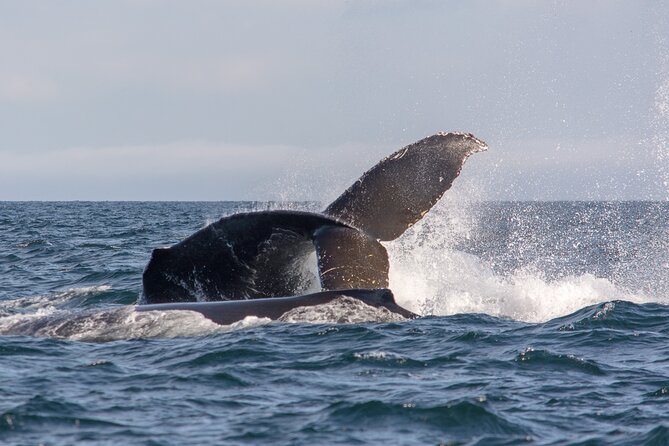
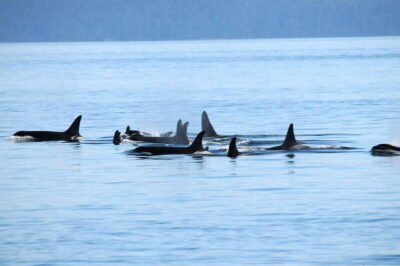
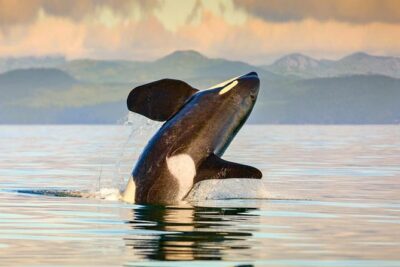
- Orcas (killer whales): These are the headline species for many people. They’re also exciting because pods can move, surface, and interact in ways that feel almost choreographed.
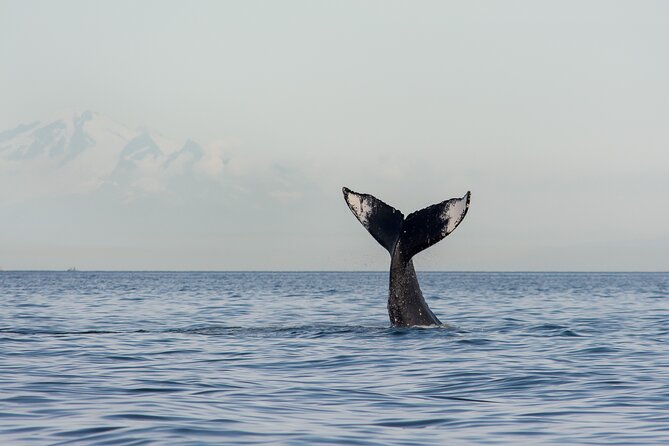
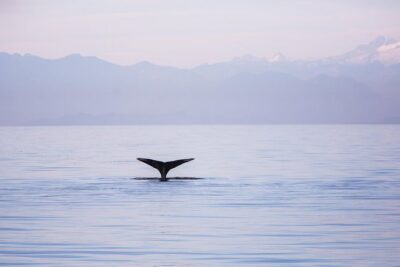
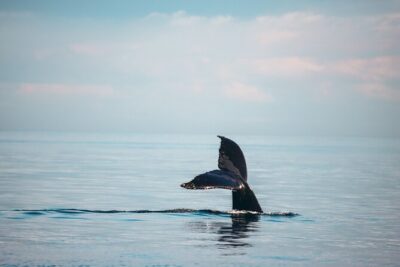
- Humpbacks: If you get lucky, you’ll see the bigger-bodied profile and the way they use the water column differently than smaller whales.
- Minke and grey whales: These sightings tend to be more about patience and good searching than constant action. When they appear, the chance to compare size and movement cues helps.
- Seals and sea lions: These can be frequent and often offer a “what’s happening right now” feeling even when whales are quiet.
- Porpoises: Harbour or Dall’s porpoises can appear as quick, busy surface moments—easy to miss if you’re not watching the water line.
- Birdlife: Eagles and seabirds add context. When birds react, it can hint at activity happening below.
A key detail I appreciate is that the approach is legal and wildlife-safe. Your vessel can get closer than some other tour boats, which can lead to memorable close encounters. Just remember: the closeness is part of the program rules, not a free-for-all. The best experiences are the ones that keep the focus on the animals, not on disruption.
Marine naturalist guidance: turning a sighting into a story
This isn’t a silent cruise. Your tour is professionally guided by a marine naturalist, and that’s one of the biggest upgrades you can buy on any whale trip. A guide changes your experience from spotting to understanding.
On board, you’ll have learning materials to use during the ride. That includes field guides and whale identification guides. Even when you’re not actively reading, they give you a framework. You can compare what you’re seeing—shape, behavior, and typical movement—against what the guide expects you to look for.
The naturalist also helps connect behavior to local ecology. You’ll learn about animal behavior, plus the ecology, history, and geography of Vancouver’s waters. That matters because whales don’t show up randomly in your imagination—they’re following food, habitat conditions, and movement patterns. When you understand that, spotting feels less like luck and more like a living system you’re temporarily part of.
In feedback, the marine naturalist is often called Yas (sometimes shown with a different spelling in translation). Either way, the theme is consistent: guides are engaging, and the information makes the sightings easier to identify in the moment.
Small onboard extras that make a cold-weather difference
Whale watching can be bouncy, and it can be chilly, even when Vancouver skies look calm. This tour plans for that with simple items that you can actually use.
You can ask for ginger candy if you get motion sickness. It’s not a cure, but it’s a smart comfort option to have ready. You can also ask for single-use ear plugs—another low-effort way to make the ride less tiring if you’re sensitive to noise.
The tour includes sunscreen and bottled water. It’s a good idea to bring a refillable water bottle anyway, since you’ll likely want water on hand during the long search. Sunscreen is easy to skip until you’re out in wind and sun glare, so I like that it’s planned for.
And one more practical point: because your sightseeing time can be split—searching, then sudden action—snacks help. Snacks are not included, and the total time can reach up to five hours depending on where the animals are. If you tend to get hungry easily, bring simple grab-and-go food you can eat while you keep scanning.


How the timing feels: why up to five hours still works
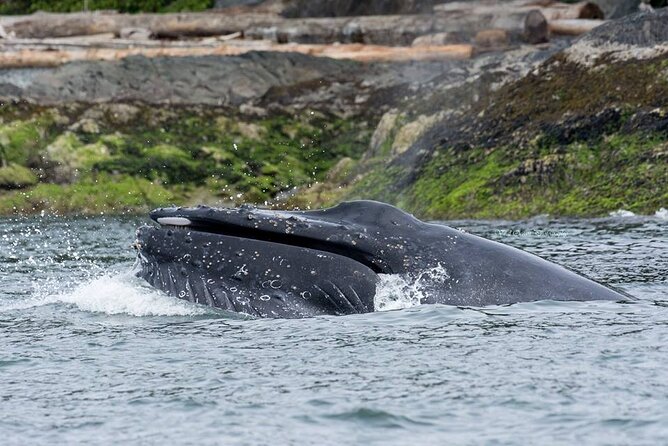
On paper, you might think, cool, I’ll see whales for a short window. On the water, the reality is different. Searching and repositioning takes time, and whale action is often brief and then gone.
So plan for a ride that can last 3–5 hours and sometimes runs close to five. That’s not a flaw—it’s how wildlife works. The most important thing is that the captain and crew know when to slow down or stop near wildlife so everyone can watch safely.
This is one reason I think this tour suits people who like being flexible. If you want a tightly scheduled, minute-by-minute show, whale watching can feel frustrating. If you’re happy to spend time scanning and learning, that time becomes part of the fun.
Also, the ship size matters. This tour caps at 35 travelers, which keeps the boat from turning into a crowded moving gym. A smaller group usually helps you find your viewing space and keep your attention on the water.
Price and value: what $169.74 is buying you
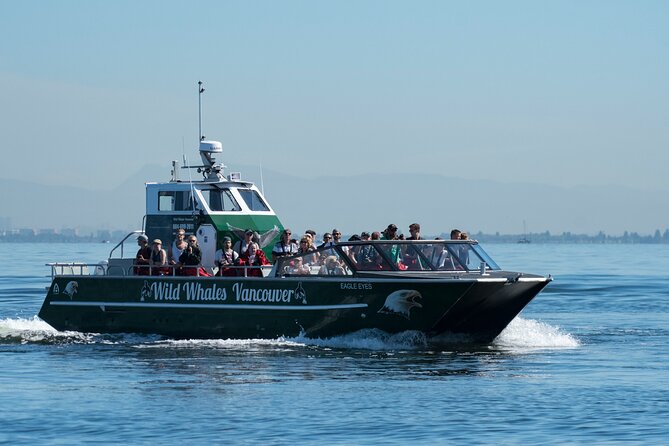
At $169.74 per person for about half a day, you’re paying for three big things: access to prime local waters, a guided experience, and real comfort tools.
First, you’re not just paying for “time on a boat.” You’re paying for a guided search with a marine naturalist and materials that help you identify what’s around you. That adds value even on days when whale sightings are brief because you’re still learning.
Second, the included anti-exposure suit is a money-saver in practice. If you’ve ever tried to dress properly for cold spray, you know how fast costs add up for the wrong clothing. Getting the right gear included makes the experience easier.
Third, the conservation angle adds real meaning. Data from Vancouver-area tour activity is used to support research and conservation initiatives. That’s not just a marketing line—when you’re paying attention to behavior and identification, you’re part of a bigger effort that helps people understand and protect these animals over time.
Weather, waves, and who should think twice
Weather matters for any marine wildlife outing, and this one is no exception. It requires good weather, and if it’s canceled due to poor conditions, you’ll be offered another date or a full refund.
If you’re prone to motion sickness, you should take the provided options seriously. Ask for ginger candy in advance if you think you’ll need it. Bringing your own water and snacks also helps because being hungry can make nausea worse.
If you have neck problems, this trip may be tough because you’ll likely be looking around often, and wildlife surfaces unpredictably. The tour isn’t recommended for neck issues, so it’s worth respecting that warning.
Otherwise, most people can participate. The open-air setup might not be for everyone, but between the suit and the 360-degree setup, it’s designed for real viewing.
Who this whale watch fits best
This is a great choice if you want:
- Action without a huge crowd, since the group max is 35
- A guided science angle with whale-ID tools, not just a drive-by
- The chance at orcas and multiple whale species, plus seals, porpoises, and birds
It’s also a solid match for first-timers who don’t want to guess what they’re looking at. The naturalist turns a random encounter into something you can actually learn from.
If you’re the type who hates waiting, you might get impatient during the search stretches. If you’re the type who enjoys noticing smaller things—birds, seals, movement patterns—this is easier to love.
Should you book this Wild Whale Watching Vancouver tour?
Book it if you want a well-run whale watch with 360° viewing, comfort gear included, and a marine naturalist who helps you identify what’s out there. The legal closeness to wildlife (within safety limits) is a meaningful advantage, and the conservation-focused data effort adds purpose beyond the thrill.
Skip or reconsider if you know you struggle with motion sickness or have neck problems, or if you need a tightly timed schedule with guaranteed long whale viewing.
My practical advice: pack warm layers even in mild weather, bring snacks for the full search window, and treat the day like a moving classroom on the water. When whales show up, you’ll be ready—and you’ll understand more than just what species you saw.
FAQ
How long is the whale watching experience?
It runs about 5 hours (approx.). The time on the water can last up to 5 hours depending on where the whales are.
Where does the tour start from?
The meeting point is 1806 Mast Tower Ln, Vancouver, BC V6H 4B6, Canada. The activity ends back at the meeting point.
What is the price per person?
The price is $169.74 per person.
What animals are you looking for?
You can search for orca (killer whales), humpback, minke, and/or grey whales, plus other wildlife like sea lions, porpoises, harbour seals, bald eagles, great blue herons, and many seabird species.
What does the open-air boat experience include?
The tour is on an open-air vessel (Eagle Eyes) with a 360° view. You’ll also receive a full-length anti-exposure flotation suit to wear over your clothing.
What help is provided for motion sickness?
You can request ginger candy. Ear plugs can also be provided upon request.
Is there anything you should bring?
Snacks are not included, so bring your own if you want food during a trip that can run close to five hours. A refillable water bottle is also recommended, though bottled water is carried on board.
Is the tour suitable if I have neck problems?
It is not recommended for travelers with neck problems.
What happens if weather is poor?
This tour requires good weather. If it’s canceled due to poor weather, you’ll be offered a different date or a full refund.
Can I cancel and get a full refund?
Yes. You can cancel up to 24 hours in advance for a full refund.
The Wider Vancouver Shelf
- Vancouver Half-Day Whale Watching Adventure with Free Photos★ 5.0 · 5,000 reviews
- Big Bus Vancouver Hop-On Hop-Off Sightseeing Tour★ 3.5 · 3,028 reviews
- Victoria & Butchart Gardens Tour with Ferry from Vancouver★ 4.5 · 2,703 reviews
- Vancouver: Covered Whale Watching Adventure with Free Photos★ 4.8 · 2,260 reviews
Back Out for the Orcas
- Vancouver Half-Day Whale Watching Adventure with Free Photos★ 5.0 · 5,000 reviews
- Vancouver: Covered Whale Watching Adventure with Free Photos★ 4.8 · 2,260 reviews
- Whale-Watching Tour from Vancouver★ 4.5 · 1,572 reviews
- Vancouver’s Intimate West Coast Whale Watching Experience★ 4.5 · 698 reviews
Just Reviewed in Vancouver
- Private Transfer from Vancouver Airport to Cruise Terminal (Port)
★ 5.0 · 3 reviews - Private Chauffeured Airport to Whistler Transfer (YVR – Whistler)
★ 3.5 · 3 reviews - Experience the Beauty of Vancouver’s Forests by Bike/E-Bike
★ 5.0 · 3 reviews - Banff, Moraine Lake, Lake Louise and Columbia Icefield 4 Day Tour
★ 4.5 · 3 reviews - Arrival Transfer: Vancouver Airport YVR – Vancouver by Luxury SUV
★ 5.0 · 3 reviews - Vancouver Waterfront Guided Bike/E-Bike Tour
★ 5.0 · 3 reviews
Whale Watching from Vancouver, compared.
 ★ 5.0Vancouver Half-Day Whale Watching Adventure with Free PhotosFrom $1935,000 reviews
 ★ 4.8Covered Whale Watching Adventure with Free PhotosFrom $1882,260 reviews
 ★ 4.5Whale-Watching Tour from VancouverFrom $1571,572 reviews
 ★ 4.5Vancouver’s Intimate West Coast Whale Watching ExperienceFrom $177698 reviews
 ★ 5.0Vancouver Sunset Whale Watching Adventure with Free PhotosFrom $193454 reviews
 ★ 4.7Vancouver, BC: Whale Watching Tour with GuideFrom $152270 reviews
 ★ 4.5Victoria Day Trip by Seaplane + Whale Watching by BoatFrom $546142 reviews
 ★ 4.5Day Trip to Victoria Seaplane with Whale WatchingFrom $520109 reviews
Browse the lists this tour appears in