
Reviewed · STANLEY PARK & SEAWALL TOURS
Talking Trees: Stanley Park Indigenous Walking Tour Led by a First Nations Guide
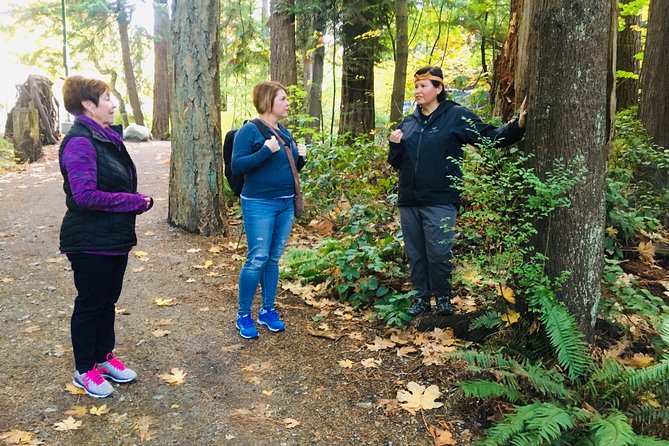
Trees can talk in Stanley Park. This Talking Trees walk brings First Nations storytelling to Beaver Lake, with your Cultural Land Ambassador sharing family history and local plant knowledge. I especially love the slow pace and the way you learn real, practical uses of trees for food, medicine, shelter, and art. One thing to consider: you’ll start at the Stanley Park Bus Loop gazebo, so give yourself a little extra time to find the group and check in.
The walk is about 1.5 hours total, and the main trail loop is easy and flat (roughly a little more than 1 mile / 2 km). If you’re juggling a Vancouver schedule, you’ll also like that there are several departure times, so you can pick the one that fits your day. Plus, you get a single cup of Talaysay Hush Tea (and coffee or tea) during the experience.
In This Review
- Key things I’d zero in on before you book
- Why Talking Trees in Stanley Park feels more than a nature stroll
- Finding your way to the Stanley Park Bus Loop meeting gazebo
- Stop 1: The Bus Loop introductions that set the tone
- Stop 2: The Beaver Lake forest loop (easy walking, big storytelling)
- The real value of the pauses
- Plant knowledge you can carry into the rest of your Stanley Park day
- Stop 3: Back to the Bus Loop, with time for follow-up questions
- The included tea moment: Talaysay Hush Tea and a slower rhythm
- Price and timing: does $60.08 feel worth it?
- Which guides you might meet (and why it matters)
- Who should book this Stanley Park Indigenous walking tour
- Should you book Talking Trees?
- FAQ
- How long is the Talking Trees tour?
- Where does the tour start?
- Is the tour difficult?
- What’s the walking distance around Beaver Lake?
- What language is it offered in?
- What’s included in the price?
- Is public transportation available near the meeting point?
- Are service animals allowed?
- Do I need to bring anything like a ticket on my phone?
- What’s the cancellation policy?
- What if I book and need confirmation?
Key things I’d zero in on before you book
- First Nations guide with personal, lived family context
- Easy Beaver Lake loop (about 2 km) at a relaxed pace
- Plant spotting tied to food, medicine, shelter, and tools
- Talaysay Hush Tea included in the middle of the experience
- Frequent stops so questions feel natural, not rushed
Why Talking Trees in Stanley Park feels more than a nature stroll
Stanley Park is gorgeous, sure. But this tour works because it gives you a second way to see what you’re standing in. Instead of treating trees like background scenery, your guide connects them to daily life—how the Coast Salish First Nations people and later settlers lived with the land, and how they understood it over generations.
You’ll hear the stories straight from a trained First Nations Cultural Land Ambassador. That matters. A guide sharing their own family history doesn’t just list facts. It gives you a sense of continuity—how knowledge moves through people, not just through books.
And the best part is that you’re not walking fast to “check off” a route. The pace stays leisurely with pauses built in. That’s when the interpretive plant talk lands, because you actually have time to look.
Finding your way to the Stanley Park Bus Loop meeting gazebo
This tour starts at the Stanley Park Bus Loop, right beside the Mini Train and Aquarium parking area. If you’re driving, you enter the park from Georgia Street, follow the Causeway, then take the Pipeline Road exit at the roundabout. From there, continue uphill past the Rose Garden and turn right into the parking lot for the Mini Train, Aquarium, and Bus Loop.
Inside the Bus Loop area, check in at the round, open-air wooden gazebo. That’s where your Cultural Land Ambassador waits before the group departs together.
Two practical notes:
- The tour is near public transportation, so you can plan without relying on a car.
- It’s smart to arrive early. One review noted meeting instructions can be confusing, and a quick early arrival helps you avoid stress.
The park rewards repeat laps. More Stanley Park picks
Stop 1: The Bus Loop introductions that set the tone
The first stop is basically the warm-up. You’ll gather at the gazebo inside the bus loop, then get brief introductions with your Cultural Land Ambassador.
This is where the guide frames what you’re about to learn. Some guides may share welcoming moments in their own style (including singing and drumming, depending on the guide and the departure). Either way, the goal is the same: you’re not just hiking—you’re learning how to read the forest.
After that, the group walks together toward Beaver Lake to begin the main portion of the tour.
Stop 2: The Beaver Lake forest loop (easy walking, big storytelling)
The main part of the experience is a guided walk around Beaver Lake. The total walking time is about 90 minutes, and the route loops around the lake before returning along the trail to the meeting point.
Distance-wise, think of roughly a little more than 1 mile (about 2 km). The terrain is presented as easy, and the pace stays relaxed with regular pauses. One highlight from the reviews: an 80-year-old using a cane found the walk comfortable, which tells me this isn’t the kind of outing that turns into a grind.
What you’ll actually do out there:
- Follow shaded forest trails.
- Pause at iconic points for storytelling and explanations.
- Ask questions and get answers.
- Listen for the “why” behind each plant and feature—not just what it is.
Your guide points out local plants and trees and connects them to Indigenous knowledge: plants harvested for food, shelter, art, and medicine. You also learn how Native people managed the land for generations, and how Coast Salish First Nations lived in this area.
A few specific examples from guide-led storytelling show up again and again in the feedback: cedar is discussed in practical ways (including uses for everyday items), and medicinal properties of trees and shrubs come up more than once. You’re also likely to hear about how harvesting was done with respect for the land, not in a take-everything way.
The real value of the pauses
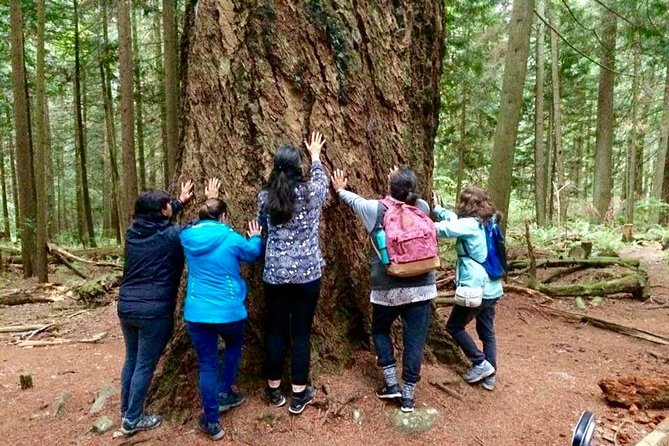
A normal park walk moves too fast for understanding. Here, stopping is part of the design. You’re given time to look at bark, needles, leaves, and growth patterns, then hear what those details meant to people over time.
If you like quieter sightseeing—slower, more grounded, less photo-rush—this is one of those tours that feels like it changes how you see the place.
Vancouver gives up more on foot. Other walks



Plant knowledge you can carry into the rest of your Stanley Park day
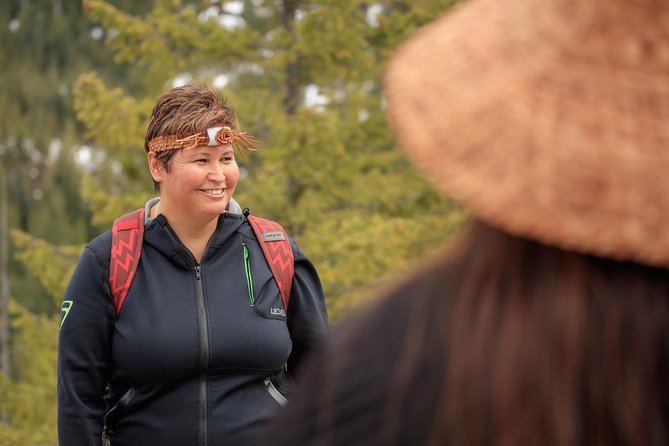
By the time you’re halfway around Beaver Lake, you start noticing the forest like a map. Your guide highlights how plants can represent multiple things at once: a food source, a medicine, material for shelter, and even parts used for cultural or practical items.
That’s the theme: trees and plants aren’t just scenery. They’re systems—living resources with names, uses, and responsibilities attached.
You may also hear cultural context that goes beyond plants alone, including how the area fits into Coast Salish territories and connections to the land. One review specifically called out Musqueam, Squamish, and Tsleil-Waututh as part of that Coast Salish framing, which matches what you can expect from the tour’s emphasis on local Indigenous history.
And if you’re the type who wants to understand more than the basics, the best part is that you’re not stuck with one-way talking. The guide encourages questions during the stops, so you can follow your curiosity rather than just absorb a script.
Stop 3: Back to the Bus Loop, with time for follow-up questions
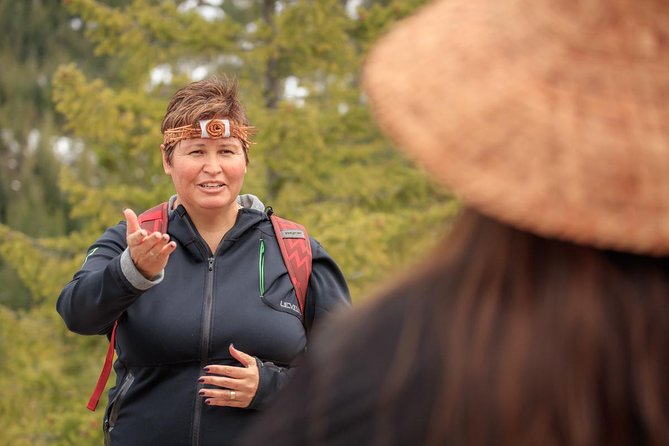
When you finish the loop around Beaver Lake, you head back along the forest trail toward the Stanley Park Bus Loop. The final stretch gives you a relaxed buffer to ask anything you didn’t have a chance to cover earlier.
It also helps that the tour ends where it began. You’re back at the same meeting point, so it’s easy to move on—whether that means heading to your vehicle, catching a bus, or continuing with other Stanley Park exploring.
The included tea moment: Talaysay Hush Tea and a slower rhythm
Included in the price is coffee and/or tea, plus a single cup of Talaysay Hush Tea. You’ll often get the tea during the walk (several guide-led experiences mention it mid-tour), which turns a long forest loop into something more human.
In cool or rainy weather, tea feels practical—not just nice. Even if you’re used to city life, this break helps you settle into the pace of the forest.
Also, it’s a nice reminder that this is not a “look but don’t touch” kind of experience. The tour is designed to connect you to everyday uses of plants.
Price and timing: does $60.08 feel worth it?
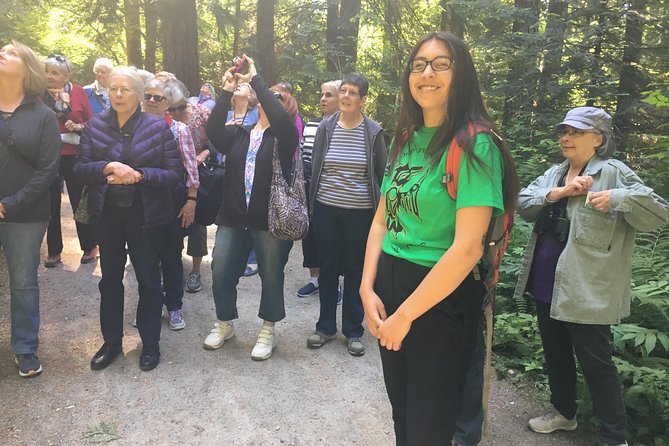
At $60.08 per person for about 1 hour 30 minutes, you’re paying for something more specific than a casual walk in Stanley Park.
Here’s the value breakdown:
- You get a trained Cultural Land Ambassador delivering Indigenous history and plant use knowledge.
- The experience is structured around Beaver Lake with pauses built in for questions.
- You get Talaysay Hush Tea plus coffee or tea included, so you’re not paying extra for refreshments.
- The walking level is easy, which reduces the risk of “I booked this but my body won’t cooperate.”
Could you stroll around Beaver Lake on your own? Of course. But you’d miss the guided interpretive layer: how the guide ties specific plants to food, medicine, shelter, art, and long-term land management. If that’s what you care about—real context, not just views—the price starts to make sense.
One last note: the tour lists a maximum of 200 travelers. That sounds big on paper, but the experience is guided and pause-based. In other words, you’re there for the conversation and the stops, not for crowd-speed sightseeing.
Which guides you might meet (and why it matters)
This tour is led by Talaysay Tours with a First Nations Cultural Land Ambassador. Based on the named guides you’ll see in feedback, you could be hosted by people such as Gavin, Shay, Tyrone, Wes, Patrick, or Alfonso.
The bigger point isn’t just the names. Each guide brings their own family story and personal connection to the knowledge. When a guide also feels comfortable answering lots of questions, the whole experience can feel more like learning from a person—not consuming a product.
Who should book this Stanley Park Indigenous walking tour
This is a strong fit if:
- You want Indigenous history and culture presented in a way that’s tied to the actual land you’re walking.
- You love plant talk that feels practical (food, medicine, materials), not purely scientific.
- You prefer easy walking and regular breaks over long, nonstop trekking.
- You’re traveling with kids or are a senior who wants a comfortable pace (the feedback includes both family groups and an 80-year-old using a cane).
It’s also a smart choice if you’ve already seen the big Stanley Park highlights and want a deeper layer—something calmer, more meaningful, and more educational than a checklist visit.
Should you book Talking Trees?
I’d book it if you want Stanley Park with context—Coast Salish history, plant knowledge, and a guide who can answer questions on the trail. The easy pacing and included tea make it feel friendly and low-stress, and the Beaver Lake loop gives you a clear, doable route that doesn’t swallow half your day.
I’d think twice only if you’re the type who hates structured walking with a set meeting point, or if you’re likely to arrive late and feel flustered at check-in. The meeting spot is specific, so being early helps a lot.
If you want a Stanley Park experience that changes how you see trees, this one is a good bet.
FAQ
How long is the Talking Trees tour?
The tour runs about 1 hour 30 minutes (approx.). The walking portion totals about 90 minutes, looping around Beaver Lake.
Where does the tour start?
It starts at the Stanley Park Bus Loop in Stanley Park, Vancouver, BC V6G 3E2, Canada. The tour ends back at the same meeting point.
Is the tour difficult?
The tour is described as an easy level of walking suitable for all fitness levels, with a relaxed pace and stops.
What’s the walking distance around Beaver Lake?
The main interpretive walk covers a little more than 1 mile (about 2 kilometers), while the walking portion totals about 90 minutes.
What language is it offered in?
The tour is offered in English.
What’s included in the price?
The tour includes a Local Cultural Land Ambassador (guide) and coffee and/or tea, including a single cup of Talaysay Hush Tea (Indigenous tea blend).
Is public transportation available near the meeting point?
The meeting point is near public transportation, but public transportation itself is not included in the tour price.
Are service animals allowed?
Yes, service animals are allowed.
Do I need to bring anything like a ticket on my phone?
The tour uses a mobile ticket.
What’s the cancellation policy?
Free cancellation is available if you cancel up to 24 hours in advance for a full refund. If you cancel less than 24 hours before the start time, the amount paid is not refunded.
What if I book and need confirmation?
Confirmation is received at the time of booking.
The Wider Vancouver Shelf
- Vancouver Half-Day Whale Watching Adventure with Free Photos★ 5.0 · 5,000 reviews
- Big Bus Vancouver Hop-On Hop-Off Sightseeing Tour★ 3.5 · 3,028 reviews
- Victoria & Butchart Gardens Tour with Ferry from Vancouver★ 4.5 · 2,703 reviews
- Vancouver: Covered Whale Watching Adventure with Free Photos★ 4.8 · 2,260 reviews
Sidewalk Miles in Vancouver
- Gastown Historic Walking Food Tour★ 5.0 · 1,863 reviews
- Vancouver Lost Souls of Gastown Walking Tour★ 5.0 · 1,273 reviews
- A Wok Around Chinatown: Culinary and Cultural Walking Tour Led by a Chef★ 5.0 · 610 reviews
- The Forbidden Downtown and Gastown Walking Tour★ 5.0 · 476 reviews
Another Lap of Stanley Park
- Vancouver City Sightseeing Tour: Granville Island & Stanley Park★ 4.5 · 1,782 reviews
- Vancouver Tour: Stanley Park, Granville Island & Capilano Bridge★ 4.5 · 1,778 reviews
- The Stanley Park Bicycle Tour by Cycle City Tours★ 5.0 · 785 reviews
- Stanley Park Horse Drawn Tour in Vancouver★ 4.5 · 550 reviews
Just Reviewed in Vancouver
- Private Transfer from Vancouver Airport to Cruise Terminal (Port)
★ 5.0 · 3 reviews - Private Chauffeured Airport to Whistler Transfer (YVR – Whistler)
★ 3.5 · 3 reviews - Experience the Beauty of Vancouver’s Forests by Bike/E-Bike
★ 5.0 · 3 reviews - Banff, Moraine Lake, Lake Louise and Columbia Icefield 4 Day Tour
★ 4.5 · 3 reviews - Arrival Transfer: Vancouver Airport YVR – Vancouver by Luxury SUV
★ 5.0 · 3 reviews - Vancouver Waterfront Guided Bike/E-Bike Tour
★ 5.0 · 3 reviews
Stanley Park & Seawall Tours, compared.
 ★ 4.5Vancouver City Sightseeing Tour: Granville Island & Stanley ParkFrom $681,782 reviews
 ★ 4.5Vancouver Tour: Stanley Park, Granville Island & Capilano BridgeFrom $1361,778 reviews
 ★ 5.0The Stanley Park Bicycle Tour by Cycle City ToursFrom $81785 reviews
 ★ 4.5Stanley Park Horse Drawn Tour in VancouverFrom $48550 reviews
 ★ 5.0Stanley Park & Downtown – Vancouver Bike ToursFrom $74243 reviews
 ★ 5.0Vancouver Secrets of Stanley Park Walking TourFrom $29208 reviews
 ★ 4.9Stanley Park Bicycle TourFrom $76194 reviews
 ★ 4.5Sunset Bus Tour: Stanley Park & English Bay PhotostopsFrom $31181 reviews
Browse the lists this tour appears in