
Reviewed · STANLEY PARK & SEAWALL TOURS
Stanley Park Highlights 2.5 Hour Walking Tour
Stanley Park has a backstory, not just a view. This 2.5-hour walk is great because it strings together the park’s most famous stops with an easy route, and it leans hard into Indigenous and local history that most people miss when they go solo. One heads-up: it’s very weather-dependent, so bring rain gear if Vancouver is doing Vancouver.
I also like the pace. With a maximum of 32 people and a guide who keeps things moving, you get stops that are long enough to enjoy (and photograph) without feeling like you’re stuck in line for every photo. The only real drawback is time: each highlight gets a short visit, so if you want long wandering, you’ll likely want to add extra time after the tour.
In This Review
- Key Highlights You’ll Actually Feel
- A 2.5-Hour Loop That Helps You See Stanley Park Fast
- Meeting at Stanley Park Bus Loop (and How the Route Works)
- Stop-by-Stop Highlights From Pavilion to Lions Gate Bridge
- 1) Stanley Park Pavilion: Vancouver’s Hollywood Connection
- 2) Stanley Park Rose Garden: A Break That Smells Like Summer
- 3) At the Totem Poles: Meaning Behind the Carvings
- 4) Stanley Park’s Trees, Trails, and Wildlife
- 5) Girl in Wetsuit: Water Views With North Shore Mountains
- 6) Beaver Lake: The Peaceful Forest Lake
- 7) Hallelujah Point: A Salvation Army Story
- 8) Nine O’Clock Gun at Brockton Point: Maritime Timekeeping
- 9) Chehalis Cross Memorial: A Smallpox-Era Reminder From 1862
- 10) S.S. Empress of Japan Figurehead Replica: Japan–Canada Friendship
- 11) Lions Gate Bridge: The Finish With Big-View Energy
- What You Learn: History, Ecology, and Culture in One Walk
- Nature Stops: How to Enjoy Beaver Lake Without Chasing Wildlife
- Views and Photo Timing at the Waterline
- Is $34.99 Worth It? Value, Group Size, and What’s Included
- Who This Tour Fits Best in Vancouver
- Should You Book This Stanley Park Walking Tour?
- FAQ
- How long is the Stanley Park Highlights walking tour?
- What time does the tour start, and where do I meet?
- Is the tour in English?
- How large is the group?
- Are there admission fees for the stops?
- What happens if the weather is bad?
Key Highlights You’ll Actually Feel
- Small-group pace (up to 32) that keeps the walk lively without being chaotic
- Totem Poles stop that focuses on meaning, not just snapping photos
- Rose Garden with 3,500+ bushes where you can slow down and reset
- Beaver Lake nature moment with chances to spot wildlife like beavers, herons, or raccoons
- Brockton Point’s Nine O’Clock Gun story, including daily firing since 1894
- Lions Gate Bridge viewpoints that connect you to the city as you finish
A 2.5-Hour Loop That Helps You See Stanley Park Fast
This is a compact way to experience Stanley Park in one go. The route is built around major sights, so you’re not zig-zagging around the park trying to connect viewpoints. It’s also the right length for people who want “I did Stanley Park” without committing to half a day or more.
At 2 hours 30 minutes, you’ll move steadily between stops, with interpretation at key points along the way. The stops themselves are short on purpose: you get the story, the context, and a chance to look around, then you’re off to the next highlight.
One small detail that matters: this starts at 10:30 am. That timing can help you catch good light for the coastal and bridge viewpoints, and it’s early enough to avoid the late-day rush at the most photographed spots.
Meeting at Stanley Park Bus Loop (and How the Route Works)
You’ll meet at the Stanley Park Bus Loop in Vancouver and the tour ends back at the same meeting point. That round-trip setup is practical. It means you can plan lunch or transit right after without figuring out how to get out of the park.
You also use a mobile ticket, and the tour operates in English. Service animals are allowed, and it’s near public transportation, which helps if you’re bouncing between neighborhoods.
The other logistics point is simple: because this is mostly walking outdoors, you should treat it like a weather plan. The tour requires good weather, and if it can’t run due to conditions, you’ll be offered a different date or a full refund.
The park rewards repeat laps. More Stanley Park picks
Stop-by-Stop Highlights From Pavilion to Lions Gate Bridge
Here’s what the walk feels like, in the order you’ll see it. Each stop is brief, but the stories are the point.
1) Stanley Park Pavilion: Vancouver’s Hollywood Connection
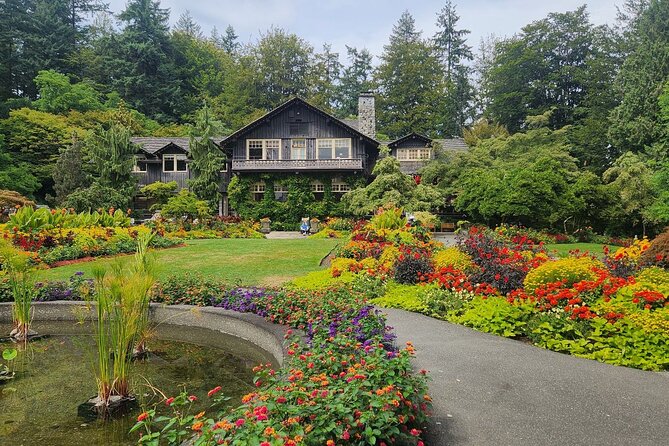
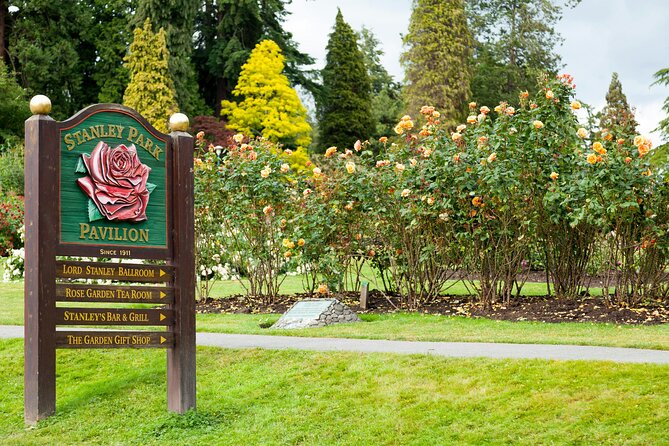
You start at Stanley Park Pavilion, where the guide shares the behind-the-scenes angle on why Vancouver matters to Hollywood. This is a clever opener because it reframes the park right away. Instead of treating Stanley Park like a museum of trees, you hear how this city gets used, filmed, and remembered.
Why it works: it sets context fast, especially for first-time visitors who only know Vancouver as a skyline and a harbor.
Watch for: the tone. This one is more about story than scenery, so listen closely and don’t rush your photos yet.
2) Stanley Park Rose Garden: A Break That Smells Like Summer
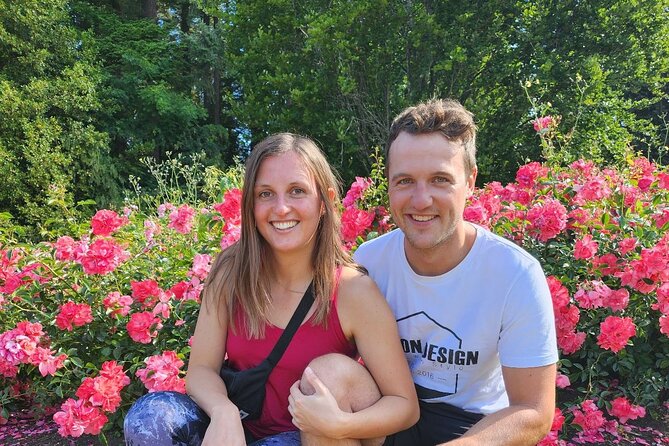
Next is the Stanley Park Rose Garden, timed so you can feel the seasonal mood. It’s described as a blooming paradise with over 3,500 rose bushes.
Even if you’re not a flower person, this stop changes the pace. It’s a calmer pocket where you can slow down, breathe, and get photos that don’t look like the same waterfall of trees from every angle.
Why it works: it gives your legs and brain a rest.
Small drawback: if you’re visiting when roses aren’t at their peak, you may enjoy the garden more for its setting than for peak blooms.
Vancouver gives up more on foot. Other walks



3) At the Totem Poles: Meaning Behind the Carvings
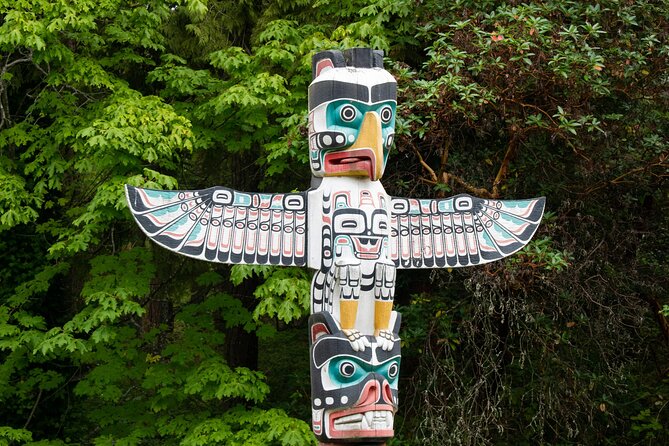
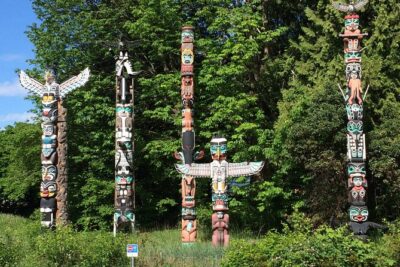
You’ll head to the Totem Poles, the park’s most visited and photographed spot. The key here is that you don’t just hear facts. You get the meaning behind the Indigenous totem poles.
This is one of the most valuable stops on the tour because totem poles are easy to treat like decor if you only look. A guide helps you see them as cultural objects with history and storytelling behind the artwork.
Why it works: it turns a photo stop into an interpretation stop.
Tip: take your first look, then listen. If you listen first, the second look hits harder.
4) Stanley Park’s Trees, Trails, and Wildlife
After that, the tour gives you time to wander into Stanley Park itself—trees, trails, and wildlife. This part is less about one specific landmark and more about helping you notice what makes the park feel alive.
You’ll likely feel the shift immediately: the city noise drops away, and the walking becomes more about rhythm. This is where your senses catch up to what your eyes saw in the first half.
Why it works: it’s a nature reorientation, not a history lecture.
Consideration: some wildlife spotting is possible but not guaranteed, so enjoy it as a bonus rather than a target.
5) Girl in Wetsuit: Water Views With North Shore Mountains
The next stop is Girl in Wetsuit, along the water. This is where the tour leans into the classic Vancouver combo: seawall energy, big sky, and a view line toward the North Shore Mountains and Lions Gate Bridge.
Why it works: you get a “this is Vancouver” moment without needing to hunt for one viewpoint.
Photo strategy: try a couple angles—one tighter for the foreground, then one wider to include the mountains and bridge in frame.
6) Beaver Lake: The Peaceful Forest Lake
Then you get a quieter change of pace at Beaver Lake. It’s tucked deep in the forest and described as peaceful and lily-covered. It’s also noted as a favorite among locals and wildlife.
If you’re lucky, you might spot animals like a beaver, a heron, or a curious raccoon. Even when you don’t see wildlife, it’s still a relaxing pause, because the space feels made for stopping.
Why it works: it’s one of the few “slow down” moments in a route full of icons.
Consideration: wildlife sightings depend on timing and behavior, so keep expectations flexible.
7) Hallelujah Point: A Salvation Army Story
At Hallelujah Point, you hear about a former site for Salvation Army prayer meetings. This stop is short, but it’s a good reminder that Stanley Park isn’t only natural space. People used it for community and faith too.
Why it works: it adds texture to the park’s timeline.
Small drawback: because it’s only about five minutes, you’ll want to listen carefully rather than scan for a big visual landmark.
8) Nine O’Clock Gun at Brockton Point: Maritime Timekeeping
Next up is Nine O’Clock Gun, located at Brockton Point. Since 1894, a cannon has been fired every day at 9:00 p.m. The original reason was to signal the time to ships in the harbor, and today it’s a symbol of the area’s maritime history.
Why it works: you get a specific detail that makes the history feel real and measurable.
Practical note: the firing happens at night, so during your daytime visit, you’re mainly there for the story and the landmark itself.
9) Chehalis Cross Memorial: A Smallpox-Era Reminder From 1862
At the Chehalis Cross Memorial, you’ll learn about a monument erected in 1862. It commemorates the Chehalis people who died during a smallpox epidemic, and it’s described as one of the oldest monuments in the city.
This stop is important because it keeps the park from feeling like only a postcard. You’re reminded that early history, including Indigenous history, is part of the landscape.
Why it works: it adds depth and honesty.
Consideration: it’s a serious topic. Keep your attention on the meaning of the memorial, not just the photo angle.
10) S.S. Empress of Japan Figurehead Replica: Japan–Canada Friendship
The tour then includes the S.S. Empress of Japan figurehead replica. The memorial honors Empress Teimei of Japan, symbolizing the friendship between Japan and Canada and reflecting historical ties between Vancouver and the Japanese community.
Why it works: it broadens the story beyond the usual “only local” framing.
How to enjoy it: don’t just glance. Take a moment to read the context the guide provides, because a figurehead replica can look like “just an object” if you don’t know why it’s there.
11) Lions Gate Bridge: The Finish With Big-View Energy
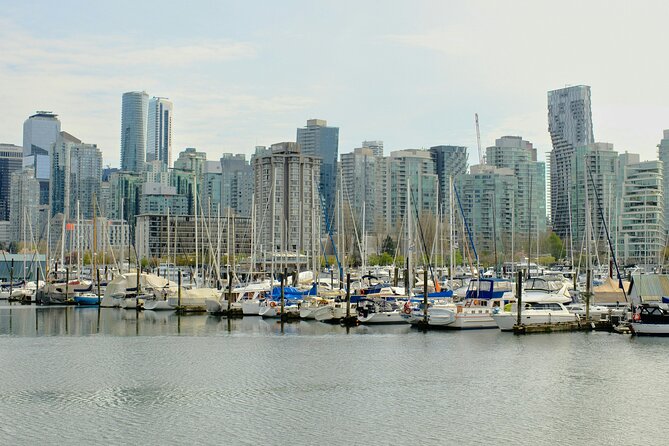
To wrap up, you’ll reach Lions Gate Bridge—a suspension bridge connecting downtown Vancouver with the North Shore. It crosses Burrard Inlet and sees daily use from cars, buses, cyclists, and pedestrians.
From the bridge area, the view is meant to connect the city’s skyline, ocean, and mountains in one glance.
Why it works: it’s a strong closing image after all the history and forest walking.
Practical note: you’ll likely want a couple extra minutes here, since the bridge views make everyone reach for their camera.
What You Learn: History, Ecology, and Culture in One Walk
This kind of tour works best when it balances three things: story, nature, and context.
- Story: You start with Hollywood connections, then you hit Indigenous totem pole meaning, then you move through maritime history and older memorials.
- Nature: Rose Garden gives you fragrance and color. Beaver Lake gives you forest calm.
- Culture: You also get community history like Hallelujah Point, plus the Japan–Canada memorial context.
One theme that really matters: the tour doesn’t treat Stanley Park as a blank scenic background. The park is framed as a place with layers—Indigenous history, colonial-era memorials, maritime timekeeping, and modern cultural links.
And there’s a guide-led element you’ll feel in the flow. In past experiences with this route, guide styles have been praised for clear speaking, a calm pace, and even helping people with photos. If you get a guide who explains with passion, the park can feel like it clicked into focus.
Nature Stops: How to Enjoy Beaver Lake Without Chasing Wildlife
I love that the walk gives you nature breaks that aren’t dependent on perfect conditions. Beaver Lake is the clearest example. You’re told it’s lily-covered and peaceful, and that wildlife might show up (like beavers, herons, or raccoons).
But you don’t need to force it.
Here’s how to do it well:
- Treat any wildlife as bonus, not the goal.
- Keep your posture calm when you pause. Wildlife is more likely to act normal when people aren’t rushing.
- Use the moment to watch for movement around the shore line rather than staring at one spot for too long.
Views and Photo Timing at the Waterline
Two stops do the heavy lifting for big views: Girl in Wetsuit and the Lions Gate Bridge finish.
Girl in Wetsuit works because it’s a foreground anchor. You can frame the ocean, mountains, and bridge in the same shot. By the time you reach the bridge, the day’s view line has usually opened up, and the skyline feels sharper.
If you’re the type who likes clean composition:
- Get one photo early when you arrive, while you still have energy.
- Get one later when the group shifts, so you’re not fighting for angles.
This is also where a guide’s pacing helps. When the group moves smoothly, you don’t end up waiting too long at a single photo spot.
Is $34.99 Worth It? Value, Group Size, and What’s Included
The price is $34.99 per person for about 2 hours 30 minutes. That’s not cheap-cheap, but it’s also not the kind of fee that requires you to be a hardcore “tour person.”
Here’s the value logic:
- You’re getting a guided route that connects multiple major sights without you planning the order.
- The tour includes passionately researched history, ecology, and culture.
- You also get local recommendations and tips, which usually helps more than you expect once you’re inside Stanley Park and deciding what to do next.
Admission is also listed as free for the stops noted, which reduces the “surprise costs” feeling. Park time is valuable, and having the guide handle the order means you spend more time looking and less time guessing.
Group size matters too. With a maximum of 32, you’re not in a giant crowd that makes storytelling impossible.
Where the value might not fit:
- If you only want scenic walking and you’re happy reading signs on your own, you might feel the tour is more structured than you want.
- If you crave long stays at one location, you’ll probably want extra solo time after the guided portion.
Who This Tour Fits Best in Vancouver
I think this tour fits best if you match one of these needs:
- You’re visiting Stanley Park for the first time and want a hit list that doesn’t feel rushed.
- You care about meaning behind iconic objects, especially the Totem Poles.
- You want a mix of nature and city history without turning the day into a research project.
- You prefer a calm, guided walking style over reading and wandering alone.
It’s also a decent choice if your schedule is tight. The route is built to cover a lot without needing a car or complex transit planning.
Should You Book This Stanley Park Walking Tour?
Book it if you want Stanley Park to feel like a story you can follow. The best part isn’t just the famous sights. It’s how the route stitches together Indigenous totem pole meaning, maritime history like the Nine O’Clock Gun, memorials like the Chehalis Cross, and the park’s living nature stops like Rose Garden and Beaver Lake.
Skip it (or plan to do only a partial day) if you’re the type who wants to spend long stretches lingering at one view and exploring your own route. This tour is designed to cover highlights in a set window, not to keep you stationary for hours.
If you’re on the fence, here’s my simple rule: if you’d rather learn as you walk than just look, this is an easy yes.
FAQ
How long is the Stanley Park Highlights walking tour?
It runs for about 2 hours 30 minutes.
What time does the tour start, and where do I meet?
The tour starts at 10:30 am. You’ll meet at the Stanley Park Bus Loop, Stanley Park, Vancouver, BC V6G 3E2, Canada.
Is the tour in English?
Yes, the tour is offered in English.
How large is the group?
The tour has a maximum of 32 travelers.
Are there admission fees for the stops?
The tour lists the highlighted stops with free admission tickets.
What happens if the weather is bad?
The tour requires good weather. If it’s canceled due to poor weather, you’ll be offered a different date or a full refund.
The Wider Vancouver Shelf
- Vancouver Half-Day Whale Watching Adventure with Free Photos★ 5.0 · 5,000 reviews
- Big Bus Vancouver Hop-On Hop-Off Sightseeing Tour★ 3.5 · 3,028 reviews
- Victoria & Butchart Gardens Tour with Ferry from Vancouver★ 4.5 · 2,703 reviews
- Vancouver: Covered Whale Watching Adventure with Free Photos★ 4.8 · 2,260 reviews
Sidewalk Miles in Vancouver
- Gastown Historic Walking Food Tour★ 5.0 · 1,863 reviews
- Vancouver Lost Souls of Gastown Walking Tour★ 5.0 · 1,273 reviews
- A Wok Around Chinatown: Culinary and Cultural Walking Tour Led by a Chef★ 5.0 · 610 reviews
- The Forbidden Downtown and Gastown Walking Tour★ 5.0 · 476 reviews
Another Lap of Stanley Park
- Vancouver City Sightseeing Tour: Granville Island & Stanley Park★ 4.5 · 1,782 reviews
- Vancouver Tour: Stanley Park, Granville Island & Capilano Bridge★ 4.5 · 1,778 reviews
- The Stanley Park Bicycle Tour by Cycle City Tours★ 5.0 · 785 reviews
- Stanley Park Horse Drawn Tour in Vancouver★ 4.5 · 550 reviews
Just Reviewed in Vancouver
- Private Transfer from Vancouver Airport to Cruise Terminal (Port)
★ 5.0 · 3 reviews - Private Chauffeured Airport to Whistler Transfer (YVR – Whistler)
★ 3.5 · 3 reviews - Experience the Beauty of Vancouver’s Forests by Bike/E-Bike
★ 5.0 · 3 reviews - Banff, Moraine Lake, Lake Louise and Columbia Icefield 4 Day Tour
★ 4.5 · 3 reviews - Arrival Transfer: Vancouver Airport YVR – Vancouver by Luxury SUV
★ 5.0 · 3 reviews - Vancouver Waterfront Guided Bike/E-Bike Tour
★ 5.0 · 3 reviews
Stanley Park & Seawall Tours, compared.
 ★ 4.5Vancouver City Sightseeing Tour: Granville Island & Stanley ParkFrom $681,782 reviews
 ★ 4.5Vancouver Tour: Stanley Park, Granville Island & Capilano BridgeFrom $1361,778 reviews
 ★ 5.0The Stanley Park Bicycle Tour by Cycle City ToursFrom $81785 reviews
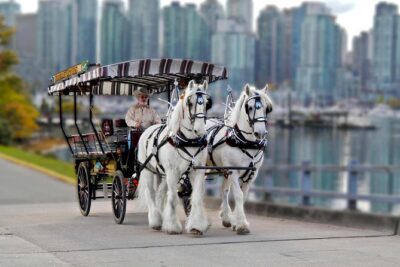 ★ 4.5Stanley Park Horse Drawn Tour in VancouverFrom $48550 reviews
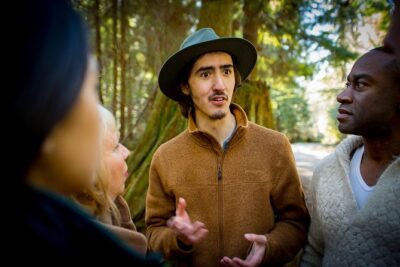
 ★ 5.0Stanley Park & Downtown – Vancouver Bike ToursFrom $74243 reviews
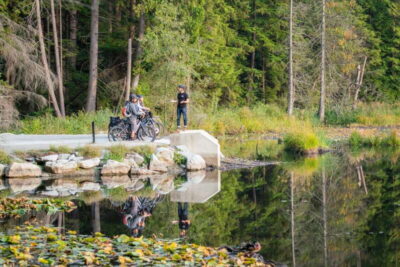
 ★ 5.0Vancouver Secrets of Stanley Park Walking TourFrom $29208 reviews
 ★ 4.9Stanley Park Bicycle TourFrom $76194 reviews
 ★ 4.5Sunset Bus Tour: Stanley Park & English Bay PhotostopsFrom $31181 reviews
Browse the lists this tour appears in