
Reviewed · GASTOWN & CHINATOWN TOURS
Self-Guided Smartphone Walking Tour of Gastown
Gastown is best when you can wander. This self-guided smartphone tour strings together the area’s biggest landmarks and a few surprise stories. You’ll learn why places feel spooky, how old Vancouver laws shaped streets, and which buildings once held power.
I really like the flexible pacing. You can take it slow, stop for coffee, and spend extra time where something catches your eye. I also like that the stop content is built for on-the-go use, so you can read or listen at each marker without planning your day around a fixed schedule.
The main drawback is practical: the experience depends on your phone working well. If the app access code or mapping is finicky, you may need to contact support, and you’ll want to plan for what you bring (device, audio setup, and data).
In This Review
- Key things to know before you go
- Why a smartphone walking tour works so well in Gastown
- Price and value: $4.85 plus extra walking routes
- Getting started near Granville Square, then ending in Victory Square
- Stop-by-stop: Waterfront Station, Harbour Centre, Steam Clock, and Blood Alley
- Waterfront Station: a haunted landmark right at the waterfront
- Harbour Centre: the tower people notice immediately
- Steam Clock: older than you think, but not as old as you might guess
- Blood Alley: executions, then restaurants
- Maple Tree Square: Gassy Jack, a torn-down statue, and the kind of change that matters
- Hotel Europe, the Police Museum, and how the tour handles Vancouver’s darker edges
- Hotel Europe: from fancy to brothel
- Police Museum: weapons, a morgue wall, and confiscated stories
- Woodward’s closure, the neighborhood after, and the meaning of change
- The oldest pub that survived prohibition and the Dominion Building’s short reign
- Vancouver’s oldest operating pub: surviving prohibition and more
- Dominion Building: tallest in the British Empire for two years
- Victory Square’s park stop: war contributions and Canadian identity
- Pace, coffee breaks, and how to stay present while following your phone
- What can trip you up: app access, directions, and your phone setup
- Who this Gastown smartphone tour is best for
- Should you book this Gastown smartphone tour
- FAQ
- How long does the Gastown self-guided walking tour take?
- How much does it cost?
- Where does the tour start and where does it end?
- What language is the tour offered in?
- Is a ticket provided on your phone?
- Do you need your own device, headphones, or data?
- Is it a group tour or private?
- Can I cancel for a full refund?
Key things to know before you go
- Low-cost, content-heavy route: The walk costs $4.85 and is designed for 2 to 3 hours on foot.
- You control the tempo: This is self-guided, so you can linger at Steam Clock or speed through the darker stops.
- Start at Granville Square, end at Victory Square: It’s a one-way stroll, not a loop.
- No equipment provided: You’ll need your own mobile device, plus there’s no mention of headphones or data being included.
- Free add-on walking routes: You get premium Gastown route content and extra free walking routes for Chinatown and Coal Harbour.
- App hiccups can happen: If the access code or directions don’t cooperate, support can help you get a working link.
Why a smartphone walking tour works so well in Gastown
Gastown can feel like two different places at once. One minute you’re in classic tourist sights, the next you’re staring at a building that holds a strange local legend. A self-guided format lets you switch modes without feeling rushed.
This tour leans into that. The route moves you through a tight cluster of landmarks, so you get constant visual payoffs. You also get short, story-based stops instead of long lectures, which makes it easier to stay curious even when you’re tired.
And because it’s smartphone-based, you can pause when the street scene changes: a café line, a bus turning, or a sudden view down a side lane. It’s the kind of experience where your timing matters less than your attention.
Price and value: $4.85 plus extra walking routes
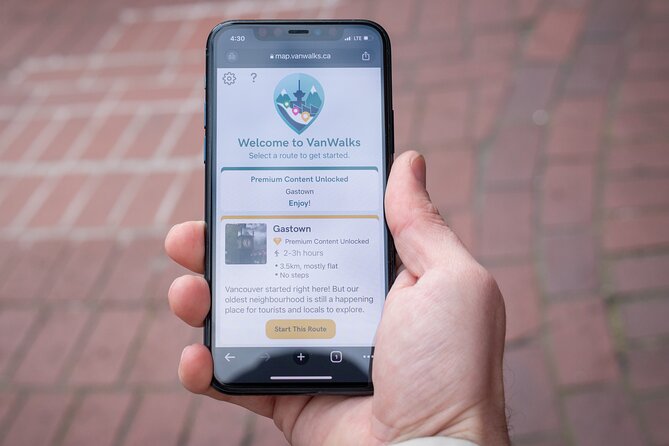
At $4.85 per person, you’re not paying for transportation or a guide in person. You’re paying for the route structure and the “what to notice” content that connects each stop to a bigger story. In a city like Vancouver, that can be excellent value if you like independent travel.
What strengthens the value is the extra content bundle. Along with the Gastown walking route premium content, you also receive free walking routes for Chinatown and Coal Harbour. That’s useful because it turns one paid purchase into multiple days of light planning.
There’s no mention of admission fees tied to the stops, and the stop notes you’ll see are marked with free admission for the listed landmarks. Still, keep your own budget flexible for any coffee or snacks you add, since part of the fun here is taking your time.
Between the steam clock and the dim sum, more to join
Getting started near Granville Square, then ending in Victory Square
You start in a clear, central zone: Granville Square and PWC Place (Lot #525200), Granville St, Vancouver. That’s a solid choice because it’s easy to reach by public transit and also easy to “drop into” on a day you already have other plans.
The tour ends at Victory Square, 200 W Hastings St. That matters because you’re walking forward, not looping back to your starting point. If you’re using transit, plan your ride home from the Hastings/City Hall area so you don’t end your afternoon with an awkward backtrack.
The opening hours are listed as open all day, which fits the self-guided style. You can start when the light is right for you, whether you prefer morning shadows or evening street energy.
Stop-by-stop: Waterfront Station, Harbour Centre, Steam Clock, and Blood Alley
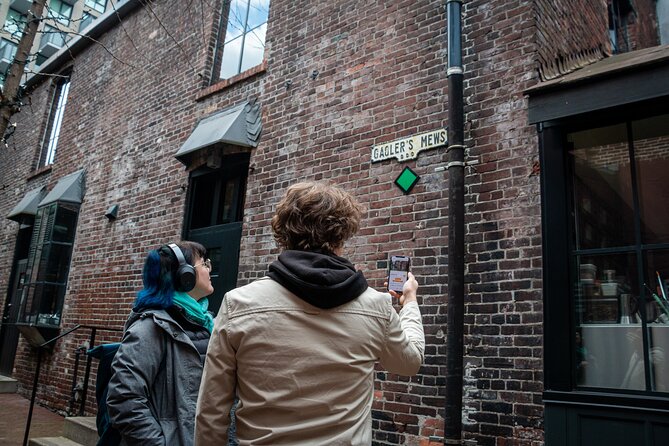
This tour’s early stretch is great for get your bearings fast. You start with big Vancouver visuals before the stories shift toward darker, stranger angles.
Waterfront Station: a haunted landmark right at the waterfront
Your first stop is Waterfront Station, and the big theme is its haunted reputation. Even if you’re not there for ghost lore, you’ll likely enjoy how the building’s presence shapes the vibe around it. It’s the kind of place where the architecture feels like a character, not just background.
This is a short stop (about 5 minutes), which is ideal at the start. You get the quick narrative hook and then you’re walking again, already oriented for the rest of Gastown.
Vancouver gives up more on foot. Other walks


Harbour Centre: the tower people notice immediately
Right after, you’ll encounter Harbour Centre—the iconic tower and the famous exterior-facing elevators. This is a “look, then read” kind of stop. The structure is memorable on sight, so the added context helps you understand why it’s such a recognizable skyline marker.
If you’re the type who likes to connect a photo you took to a real-world story, this stop does that without dragging you off course.
Steam Clock: older than you think, but not as old as you might guess
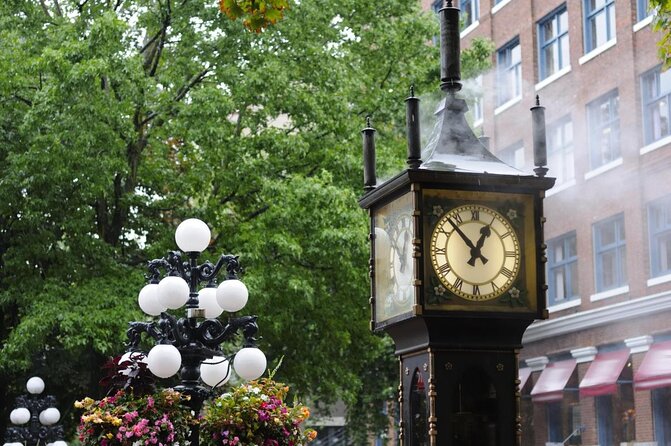
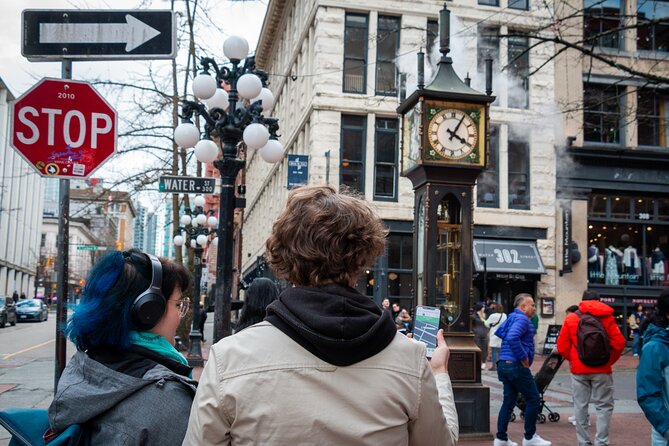
Next is the Steam Clock. The stop description calls out an easy surprise: it’s not as old as you might assume. That’s a nice lesson in how reputation forms in travel stories, even for famous objects.
Plan around the longer time here (about 15 minutes). You’ll want a little buffer to read, watch the clock, and enjoy how the site works as a photo spot and a street landmark.
Blood Alley: executions, then restaurants
Then the mood shifts. You’ll learn about Blood Alley, once the site of public executions in Vancouver, and how it now hosts trendy restaurants. That contrast is one of the reasons this route works: it reminds you that modern neighborhoods often sit on hard chapters.
This stop helps you “mentally re-scan” Gastown. Once you’ve heard the past, you start noticing details in the present—street layout, building facades, and how people now use spaces that used to carry fear.
Maple Tree Square: Gassy Jack, a torn-down statue, and the kind of change that matters
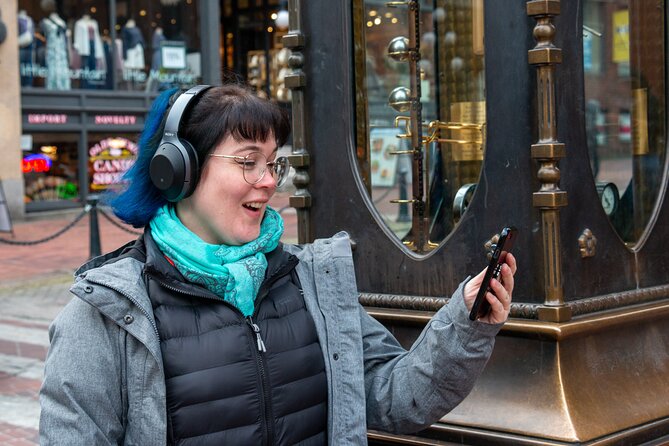
After you cross into the next cluster, the tour hits a key intersection: Maple Tree Square. The theme here is Vancouver’s early pub culture and how public memory stays messy.
You’ll hear about the first pub that kicked off Vancouver, opened by Gassy Jack. That’s a vivid origin story, and it also explains why this intersection matters beyond being a convenient place to walk through.
The stop also points to a more modern detail: a protest-driven change where his statue was torn down. The point isn’t to score points; it’s to show how history gets reinterpreted as society changes. On a self-guided route, that kind of context makes you look up from your phone and around at what’s actually present.
This stop is short (about 5 minutes), so it lands like a quick but meaningful reset—especially useful midway through the walk.
Hotel Europe, the Police Museum, and how the tour handles Vancouver’s darker edges
If the early part of the route is “where do I stand,” this section becomes “what happened here.” Two stops in particular bring the mood down in a way that feels honest rather than gimmicky.
Hotel Europe: from fancy to brothel
The route includes the Hotel Europe, described as the fanciest building in town when it opened, later becoming a brothel when a nicer hotel opened downtown. That’s the kind of local economic shift story that helps you understand cities as living systems.
It also gives you a way to read the building’s form. Even without seeing old photographs, you can use the info to imagine how wealth, status, and demand can flip a neighborhood.
Police Museum: weapons, a morgue wall, and confiscated stories
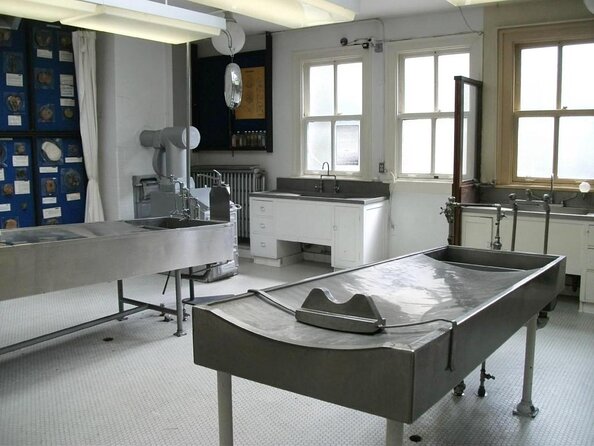
Next is the Police Museum, built in a former coroner’s office. The details you’ll focus on include a room for confiscated weapons and a morgue room with preserved tissue samples.
This is not an “on autopilot” stop. If you’re sensitive to graphic topics, you’ll want to pace yourself here and only spend the time you feel comfortable with. The good part is that the stop is structured, so you’re not wandering in a haze. You’re arriving for specific themes and moving on when you’ve got what you need.
It’s also one of the stops that turns a simple walking route into an actual learning experience. You come away with a clearer sense of how law, death investigation, and civic systems worked historically in Vancouver.
Woodward’s closure, the neighborhood after, and the meaning of change
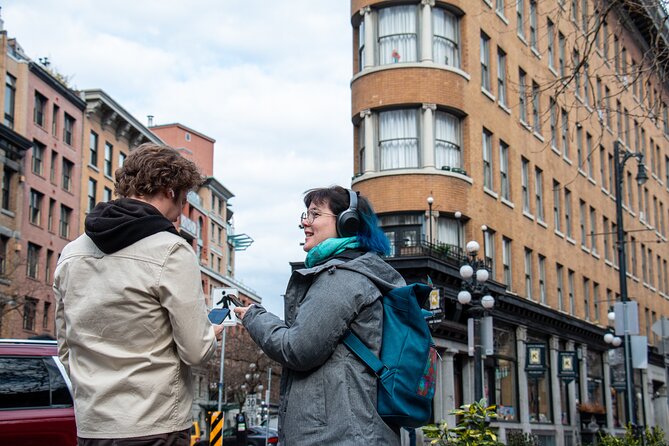
Then you shift into an area many people know today as a redevelopment story. The route stops at Woodward’s, described as Canada’s foremost department store for a long time, and it asks you to consider what happened when it closed.
You’ll learn why locals were sad when it shut down, plus how redevelopment affected the neighborhood. That’s important because it connects personal emotion to urban planning decisions, not just headlines.
If you like walking tours that explain the “why” behind what you see now, this stop is one of the strongest. Even if you’ve never shopped there, you can still understand the impact by thinking about what a large department store represented: jobs, community routines, and a reliable anchor in daily life.
The oldest pub that survived prohibition and the Dominion Building’s short reign
The tour keeps the momentum going with two landmark stories that are quick but memorable.
Vancouver’s oldest operating pub: surviving prohibition and more
You’ll stop at Vancouver’s oldest operating pub, with the highlight being survival through prohibition and other challenges. This is a great contrast to the Police Museum stop: same city, different kind of endurance.
The story makes you look at the building as continuity. It’s not just architecture; it’s a witness to changing rules, changing tastes, and changing crowds.
Dominion Building: tallest in the British Empire for two years
Then you’ll hear about the Dominion Building, which was the tallest in the British Empire when finished, but held that honor for only two years before another nearby building took over.
That one is fun because it feels like a building “career” story. It also gives you a sharper eye for scale. Once you learn that height title was short-lived, you start noticing how fast power and ambition can shift in city skylines.
Victory Square’s park stop: war contributions and Canadian identity
The last stop focuses on an important park and how Canada’s World War contributions helped build national identity. Because the tour ends at Victory Square, you can expect this to connect to that exact location.
This end-point framing helps the entire walk land with meaning. You’ve spent the route on ghosts, executions, policing, and the stories buildings tell. Then the final content pulls you outward toward how collective national history gets expressed in a city space.
If you’re walking with family or friends, this is also a good moment to talk. War-and-identity topics can turn into real conversation without needing extra context, since the tour gives you the thread.
Pace, coffee breaks, and how to stay present while following your phone
A big plus of this format is that it’s designed for stopping when you want. The walk is listed at roughly 2 to 3 hours, so it’s long enough to feel like a real outing, but short enough to fit between other plans.
In the middle of Gastown, you’ll naturally run into coffee spots. That’s actually helpful, because it gives you a “breathing pause” right when the stories start getting heavier. I like treating this as a story walk, not a checklist.
If you want to get the most out of it, use a simple strategy:
- Read or listen to the stop content once.
- Take one slow look around at the surrounding buildings.
- Move on before you lose your momentum.
This keeps the tour from turning into screen time. The goal is to pair the story with what’s in front of you.
What can trip you up: app access, directions, and your phone setup
Two practical issues come up for this kind of smartphone tour, and they’re worth planning around.
First, app access can be annoying if a code doesn’t open right away. The workaround is straightforward: reach out to support and ask for a working link. Once you’re in, it tends to run as intended.
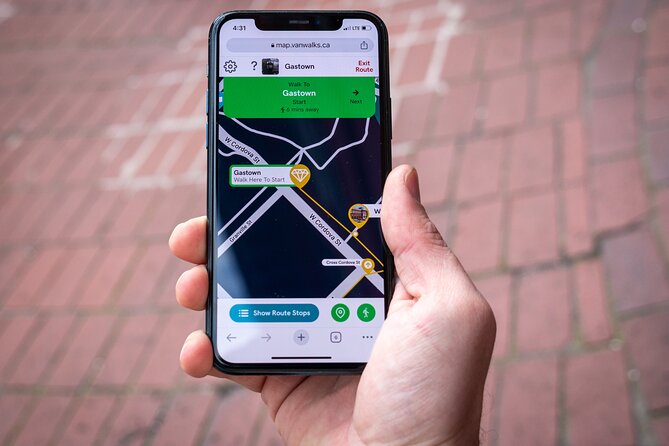
Second, directions may not always be perfect in a tight street grid. One useful tactic is to keep your eyes up for landmarks like the Steam Clock or large buildings rather than relying only on the map pin. If the map feels confusing, orient by street names and major structures.
And remember: your mobile device isn’t included, and there’s no mention of headphones. If your plan is to use audio, bring a setup that lets you hear clearly in busy spots. Also assume you’ll want mobile data or an offline approach, because the tour doesn’t bundle either into your ticket.
Who this Gastown smartphone tour is best for
This works best if you like walking, but you also like control. You’ll enjoy it most if:
- You don’t want to follow a group of strangers at a fixed pace.
- You enjoy short, story-driven stops.
- You’re comfortable figuring out a route on your phone without hand-holding.
It’s also a good fit if you want a light day in Vancouver. The route is concentrated, and the whole thing can be done in a couple of hours without turning into a full-day commitment.
If you need step-by-step verbal navigation through audio only, or if your phone battery is always questionable, this may feel stressful. In that case, you can still do it, but you’ll want to treat it as a tech-dependent outing: fully charged device, plan for quiet listening, and a backup option if the code or map acts up.
Should you book this Gastown smartphone tour
Yes, you should book it if you want a low-cost, self-paced story walk that hits the big Gastown icons and then doesn’t shy away from the city’s darker side. The mix of haunted building lore, execution history, policing and evidence topics, and straightforward landmarks like the Steam Clock makes it more than a scenic stroll.
Skip it if you’re allergic to phone-dependent navigation or you tend to have app login issues. In that case, the small risk of an access problem can outweigh the value for you, especially since you’re not getting a live guide to smooth things over on the spot.
If you’re on the fence, I’d frame it like this: $4.85 is cheap enough to try, but you still want to show up prepared. Charge your phone, have a plan for listening, and be ready to let the stories guide your walking pace.
FAQ
How long does the Gastown self-guided walking tour take?
The tour is listed as 2 to 3 hours (approx.).
How much does it cost?
It costs $4.85 per person.
Where does the tour start and where does it end?
It starts at Granville Square and PWC Place (Lot #525200, Granville St, Vancouver). It ends at Victory Square, 200 W Hastings St, Vancouver.
What language is the tour offered in?
The tour is offered in English.
Is a ticket provided on your phone?
Yes. The tour includes a mobile ticket.
Do you need your own device, headphones, or data?
A mobile device is not included. Headphones and mobile data are also not included.
Is it a group tour or private?
This is a private tour/activity, and only your group participates.
Can I cancel for a full refund?
Yes, free cancellation is available. You can cancel up to 24 hours in advance for a full refund. If you cancel less than 24 hours before the start time, the amount paid isn’t refunded.
The Wider Vancouver Shelf
- Vancouver Half-Day Whale Watching Adventure with Free Photos★ 5.0 · 5,000 reviews
- Big Bus Vancouver Hop-On Hop-Off Sightseeing Tour★ 3.5 · 3,028 reviews
- Victoria & Butchart Gardens Tour with Ferry from Vancouver★ 4.5 · 2,703 reviews
- Vancouver: Covered Whale Watching Adventure with Free Photos★ 4.8 · 2,260 reviews
Sidewalk Miles in Vancouver
- Gastown Historic Walking Food Tour★ 5.0 · 1,863 reviews
- Vancouver Lost Souls of Gastown Walking Tour★ 5.0 · 1,273 reviews
- A Wok Around Chinatown: Culinary and Cultural Walking Tour Led by a Chef★ 5.0 · 610 reviews
- The Forbidden Downtown and Gastown Walking Tour★ 5.0 · 476 reviews
Old Vancouver on Foot
- Gastown Historic Walking Food Tour★ 5.0 · 1,863 reviews
- Vancouver Lost Souls of Gastown Walking Tour★ 5.0 · 1,273 reviews
- A Wok Around Chinatown: Culinary and Cultural Walking Tour Led by a Chef★ 5.0 · 610 reviews
- The Forbidden Downtown and Gastown Walking Tour★ 5.0 · 476 reviews
Just Reviewed in Vancouver
- Private Transfer from Vancouver Airport to Cruise Terminal (Port)
★ 5.0 · 3 reviews - Private Chauffeured Airport to Whistler Transfer (YVR – Whistler)
★ 3.5 · 3 reviews - Experience the Beauty of Vancouver’s Forests by Bike/E-Bike
★ 5.0 · 3 reviews - Banff, Moraine Lake, Lake Louise and Columbia Icefield 4 Day Tour
★ 4.5 · 3 reviews - Arrival Transfer: Vancouver Airport YVR – Vancouver by Luxury SUV
★ 5.0 · 3 reviews - Vancouver Waterfront Guided Bike/E-Bike Tour
★ 5.0 · 3 reviews
Gastown & Chinatown Tours, compared.
 ★ 5.0Gastown Historic Walking Food TourFrom $1161,863 reviews
 ★ 5.0Vancouver Lost Souls of Gastown Walking TourFrom $291,273 reviews
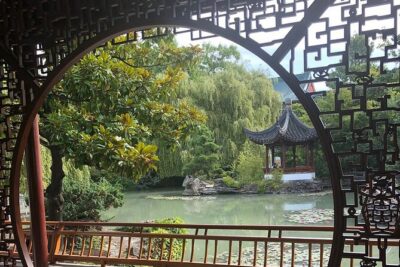 ★ 5.0A Wok Around Chinatown: Culinary and Cultural Walking Tour Led by a ChefFrom $122610 reviews
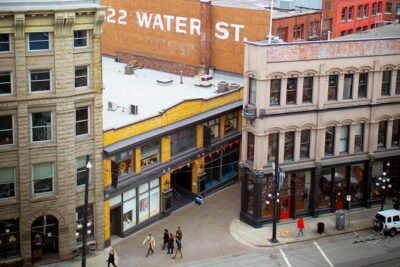 ★ 5.0The Forbidden Downtown and Gastown Walking TourFrom $29476 reviews
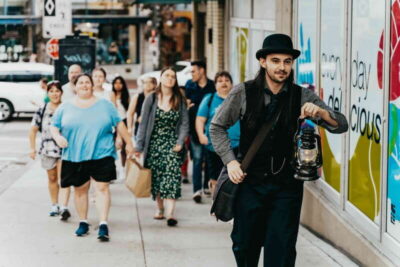 ★ 4.7Lost Souls of Gastown TourFrom $28279 reviews
 ★ 5.0Gastronomic Gastown Food Tour by Vancouver Foodie ToursFrom $231238 reviews
 ★ 5.0Experience Gastown Vancouver’s Elite Walking Food TourFrom $80134 reviews
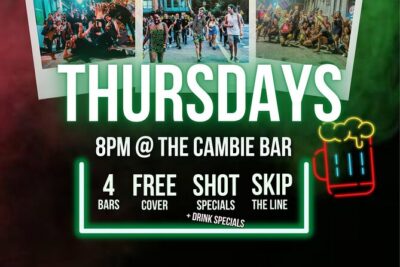 ★ 4.5Gastown Pub Crawl127 reviews
Browse the lists this tour appears in