

Reviewed · SEA TO SKY GONDOLA & SHANNON FALLS
Sea to Sky Highway Self-Guided Driving Audio Tour
A scenic highway gets better with stories. This Sea to Sky Highway self-guided driving audio tour turns a two-to-three-hour drive into a choose-your-own-adventure, with hands-free audio that plays as you go.
I especially like two things: the route is paced for real stops (not just whip-past scenery), and you get 90+ themed stories that add meaning to what you’re seeing, from First Nations connections to cliffside lookouts. A practical plus is that it can work smoothly with a rental car’s speakers, so you’re not stuck hunched over your phone.
The only real drawback to consider is that some of the best options are hikes that can quickly turn a short drive into a half-day plan, so you’ll want to decide in advance how active you feel like being.
In This Review
- Key takeaways before you hit the road
- Why this Sea to Sky Highway audio drive feels worth your time
- Getting started in Whistler: how you actually make it work
- Lost Lagoon and the Lions Gate Bridge: the story starts fast
- Cypress Provincial Park and St Mark’s Summit: optional hiking, real payoff
- Sea to Sky Highway meaning in motion: ancient footpaths and trading routes
- Crystal Falls and Anvil Island: two quick stories most people miss
- Watts Point Volcanic Centre: why the mountains look the way they do
- Murrin Provincial Park: lakes for stretching your legs
- Sea to Sky Gondola and Shannon Falls: the highest “wow” ratio
- Stawamus Chief: legends, viewpoints, and a reality check on difficulty
- Eagle Run Vista Point and Edith and Alice Lakes: slow down for the quieter magic
- Tantalus lookout and Cheakamus River: myth meets modern controversy
- Rubble Creek Trailhead and the Black Tusk option: big commitment, no surprises
- Daisy Lake, Whistler Creek, and the older whistler skiing story
- Price and value: $16.99 per group for a long drive story
- Who this tour suits best (and who should think twice)
- What I’d do to get the best experience
- Should you book? My decision guide
- FAQ
- How long is the Sea to Sky Highway driving audio tour?
- How much does the tour cost and how many people can it cover?
- Does the tour work offline without cellular service?
- Do I need to buy attraction tickets or make reservations?
- Where do I start and end the tour?
- How does the audio play while I drive?
- Is my access limited to one trip?
Key takeaways before you hit the road
- Hands-free, location-triggered audio so you don’t have to touch your phone constantly
- Offline maps for when cell service drops on the highway
- Lifetime access, no expiry, so you can reuse it later on another trip
- Optional detours and trails like St Mark’s Summit and Stawamus Chief
- Per-group pricing up to 4 people, which is strong value if you’re splitting a car
Why this Sea to Sky Highway audio drive feels worth your time
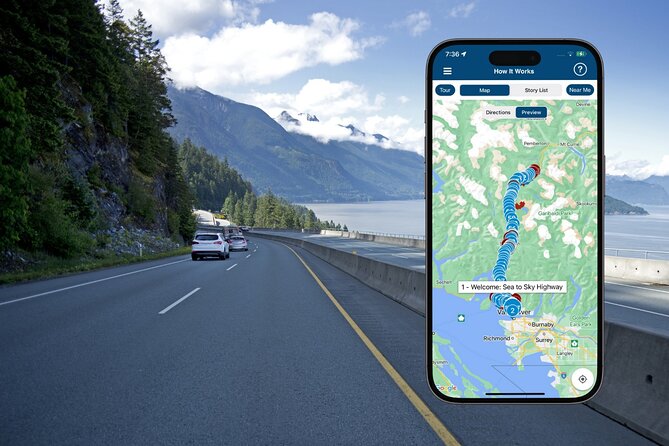
The Sea to Sky Highway is famous for a reason. You’re looking at water, mountains, waterfalls, and viewpoints that make you slow down even without a tour. What this audio experience adds is the story layer: you’re not just seeing places—you’re getting context for names, landscapes, and local legends as you pass them.
I like that the tour is built around a drive-first rhythm. It gives you short “story moments” at major points, then lets you decide when to stop for longer looks. That makes it work well whether you have one afternoon or you want to stretch it into a bigger outing with a hike or two.
Also, the format is built for independence. You don’t have to keep up with a group, and you can pause when the weather changes or you just need a snack stop. That flexibility matters a lot on this stretch of BC, where conditions can shift fast and pull you toward extra stops.
Getting started in Whistler: how you actually make it work
This tour starts and ends at the Whistler Visitor Centre (4230 Gateway Dr, Whistler, BC V8E 0Z8). It’s a private booking for your group, and there’s no guide meeting you at the start point. Instead, you activate the first story at the starting location, and the audio cues guide you to the next stop.
One detail that makes or breaks audio tours like this: planning your phone connection. You’ll download a separate Action’s Tour Guide app, then enter the password you receive by email and text. The tour app must be downloaded while you have strong Wi-Fi or cellular, and then it should work offline after that.
For in-car sound, you can connect your phone to the stereo using Bluetooth, USB, or AUX. The setup is compatible with Apple CarPlay, and Android Auto support is listed as on the way. If you’re doing any walking to viewpoints or waterfall boardwalks, keep in mind you might prefer headphones for convenience, since the audio is intended to play hands-free based on your position.
Shannon Falls and the gondola, packaged differently
Lost Lagoon and the Lions Gate Bridge: the story starts fast
You’ll begin in the Whistler area, then the audio route brings you toward Vancouver’s waterfront scenery. One of the first stops is Lost Lagoon in Stanley Park. It’s a calm, watery pocket of the park, and the audio ties its name to Emily Pauline Johnson, a Canadian poet, referencing her poem titled Lost Lagoon. Even if you’ve seen Stanley Park before, this kind of naming history makes the place feel more specific.
Soon after, you’re in bridge country—the Lions Gate Bridge is next in the narrative. The audio points out the two leftmost peaks ahead that relate to why the bridge is called Lions Gate. There’s also a note about how people imagine the peaks resembling the twin lions of Trafalgar Square if you squint—silly in a fun way, and exactly the sort of quick mental image that helps you remember what you’re looking at.
Practical tip: even if you don’t stop for every location, slow down safely and let the audio finish its thought. Some of the strongest context is delivered in short bites right as you’re looking at the matching scenery.
Cypress Provincial Park and St Mark’s Summit: optional hiking, real payoff
Once you’re heading into the mountains side of the route, the tour gives you two ways to play it: a detour into Cypress Provincial Park or a more serious hike toward St Mark’s Summit.
If you take the Cypress option, you’ll have about a ten-mile one-way detour. The reward, per the audio, is breathtaking mountaintop scenery. That makes it a good choice if you want mountains now, not later.
For St Mark’s Summit, the audio explains the setup clearly: the road you’re on will end, and the rest is on foot. The trail starts at Cypress Creek Lodge, and the hike is about seven miles round trip. It’s considered intermediate and takes most people around four to five hours.
Here’s the key consideration: the overall drive tour time is around 2 to 3 hours, but St Mark’s Summit can take over that by itself. If you’re traveling with mixed energy levels, I’d treat this hike like the main event, not the “extra if we feel like it” part.
Sea to Sky Highway meaning in motion: ancient footpaths and trading routes
Now you’re on the famous part of the route: the Sea to Sky Highway. The audio adds an important perspective—while the road itself is modern, the original path beneath much of the highway is described as an ancient footpath used by the Squamish and Stó:lō Nations. The idea is connection and trade between communities, not just travel for tourists.
That matters because it changes how you interpret what you see. When you’re in the car and the scenery looks like a wall of cliffs and forest, it’s easy to treat it as scenery only. The audio nudges you to think about movement of people long before the highway existed.
Your pace, your detours


Crystal Falls and Anvil Island: two quick stories most people miss
As you go, there’s a stop for Crystal Falls via a road access point off the main drive. The audio calls it a lovely roadside waterfall many visitors miss. This is the kind of stop that works even if your group only wants a short break.
Next comes Anvil Island, told through Squamish legend. The audio references a serpent named Sínulhkay̓, said to live on the island’s highest peak and watch people far below. In the story, Sínulhkay̓ is tied to shaping the land, or at least to frightening village life, lurking in the water and devouring people in legend. It’s dark folklore, but it also gives a reason to look at an island instead of treating it as background.
If you’re the type who likes “one quick photo” stops, these two work well. If you want fewer stops, you can keep moving and still catch the major viewpoint stories.
Watts Point Volcanic Centre: why the mountains look the way they do
The audio then points you toward Watts Point Volcanic Centre, explaining that the surrounding mountains are largely composed of volcanic rocks. Watts Point is described as where much of that volcanic material erupted from.
The best part of this stop is the calm scientific reassurance: it hasn’t erupted for about 90,000 years and isn’t expected to erupt anytime soon. That keeps the story grounded, so you’re not just absorbing myth—you’re learning how geology shaped the region.
If you’re someone who likes nature facts without turning the drive into a lecture, this section hits the sweet spot.
Murrin Provincial Park: lakes for stretching your legs
When you need a breather, the tour offers Murrin Provincial Park. It’s described as having a placid lake and trails with good variety. You can take an easy 1.5-mile stroll around the lake, or choose the more challenging Jurassic Ridge Trail.
Jurassic Ridge is outlined as a two-mile loop that climbs almost 700 feet and delivers panoramic views from the top. That’s a classic option: you can match the hike to your time and energy, then still feel like you made use of the stop.
This is also a good place to refuel. Even though it’s part of a drive tour, it’s one of the stops that can turn into a mini outing without messing up your ability to finish the full route.
Sea to Sky Gondola and Shannon Falls: the highest “wow” ratio
Next up is the Sea to Sky Gondola, described as taking passengers nearly 1,000 meters above sea level to a lodge and viewing platform. The gondola is one of those choices that makes the tour feel flexible: you’re not locked into hiking only.
Right after that is Shannon Falls Provincial Park, with an astonishing 1,000-foot waterfall. The audio also says Shannon Falls is the third tallest waterfall in British Columbia. There’s a boardwalk around the base, and the hike to the falls is about 20 minutes, which makes it accessible for many people who still want a walk.
If your plan includes just a couple “major stop” moments, these are strong candidates. The gondola handles the big-altitude feel, while Shannon Falls gives you the iconic waterfall payoff with a short, manageable effort.
Stawamus Chief: legends, viewpoints, and a reality check on difficulty
The Stawamus Chief section includes two paths: an expert trail turn-off and the main drive-by approach. For hikers, the audio mentions the Stawamus Chief Trail as climbing 2,300 feet to the top of The Chief. It frames it as a trek, so it’s not a quick leg-stretcher.
For non-experts, you can continue driving straight past the mountain. The audio then adds a specific historical note: the first man to ever summit it was Ed Cooper, and it took him four weeks. Even if you never hike up, that detail changes the mountain from a photo subject into a place with effort and history behind it.
My practical advice: if you have even a moderate hiking interest, look at the Stawamus Chief Trail as a commitment, not a side task. If you don’t, the drive-by option still works because the mountain dominates the view.
Eagle Run Vista Point and Edith and Alice Lakes: slow down for the quieter magic
The tour continues with a detour style stop at Eagle Run Vista Point, where you get panoramic views and a chance at spotting an eagle. The audio notes it takes a quick 5–10 minute detour if you want to do it. This is a good “legs and eyes” stop, especially if you’ve already done the waterfall and gondola highlights.
Then you move into lake country. Edith Lake is described as dominated by four lakes—Alice, Edith, Fawn, and Stump—and the audio notes how most name origins have been lost over time. Edith Lake is the exception, with a story described as a bit peculiar, though the details aren’t spelled out in the info you provided.
Next is Alice Lake Provincial Park, where the main leg-stretching option is the Four Lake Trail: an easy 4-mile loop that weaves past all four lakes, under about three hours. That’s a classic “good effort without turning it into a marathon” hike.
If you’re traveling with people who don’t want constant climbing, these lakes help balance the itinerary with flatter terrain and steadier views.
Tantalus lookout and Cheakamus River: myth meets modern controversy
At Tantalus lookout, the audio points to Mount Tantalus, and explains the name comes from Greek mythological figure Tantalus. The story ties Tantalus to Zeus’s sons, and the idea that he was welcomed at Olympus even with his mixed mortal connection. That myth link works well in this region because the mountains feel like they belong in legends anyway.
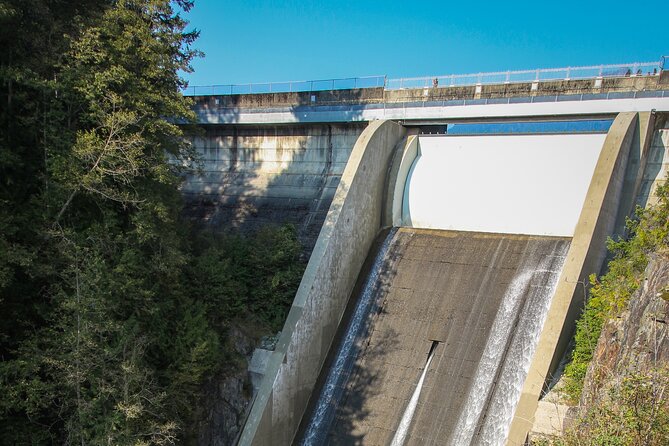
Then you’ll drive alongside the Cheakamus River with a future-facing glimpse of the Cheakamus Hydroelectric Dam. The audio says the dam has been around since 1957 and has recently been the source of much controversy. That’s one of those moments where the tour keeps it honest: not every story is a feel-good postcard.
A good way to use this section: treat it as a prompt to slow down and think about what rivers mean when power generation and nature overlap.
Rubble Creek Trailhead and the Black Tusk option: big commitment, no surprises
One of the tour’s strongest “your pace decides everything” moments is the optional turn toward Rubble Creek Trailhead. The audio describes it as a brutally challenging 15-mile trail that climbs to the top of Black Tusk Mountain and calls it an all-day affair. It explicitly says not to try it on a whim.
That’s a useful warning. People often underestimate distance and elevation, especially when the scenery makes the drive feel short. Here, the audio is doing the responsible thing: setting expectations so you don’t get halfway into a hike and realize it was never your plan.
If your goal is to keep the whole tour near the 2–3 hour mark, you’ll likely skip this. If your goal is a day hike, then plan for it as the centerpiece.
Daisy Lake, Whistler Creek, and the older whistler skiing story
The tour passes Daisy Lake, named by Joseph William Mckay, described as Metis (with a note that Metis can refer to people from the historic Metis community of Manitoba or mixed European and Indigenous heritage). This is one of the places where the audio uses names to point toward people and identity, not just geography.
Then you near Whistler Creek, often called the Creek by locals in the audio. It tells you it was the original base for Whistler Mountain skiing when the area had just a single six-person gondola. The audio contrasts that with how Whistler later grew to have 79 lifts. Even if you know Whistler’s growth story, this kind of quick before-and-after framing makes it feel real and specific.
Price and value: $16.99 per group for a long drive story
At $16.99 per group (up to 4 people), the big value is that you’re paying per car, not per person. That makes the tour easier to justify if you have a small group, a couple with a friend, or a family with older kids who can handle the audio setup.
You’re also buying something practical: lifetime access with no expiry. That means you’re not stuck treating it like a one-time souvenir. If you return to BC, you can reuse it without paying again.
Time value matters too. The tour is designed for about 2–3 hours overall, covering a route described as over 75 miles long and including more than 90 audio stories. Even if you only listen to part of it and treat the rest as a bonus “free learning,” you still get enough to feel like the drive was used well.
Who this tour suits best (and who should think twice)
This tour fits best if you like scenic drives with context, and if you enjoy choosing your own level of effort. It’s a strong match for couples, friends, and small families who want control over stops and don’t want to wait around for a group.
You’ll also like it if you value offline reliability. The inclusion of offline maps and location-triggered audio makes it feel less fragile than a purely map-based self-tour.
It may not be perfect if you want very high energy narration nonstop. One of the reviews you shared described the audio as a nice addition but not totally captivating. That doesn’t mean it’s bad—it just means the style might land better for people who like steady storytelling rather than constant hype.
What I’d do to get the best experience
If you want the highlights without losing your day, I’d pick a short list of “must stop” moments: Shannon Falls, Sea to Sky Gondola, and one viewpoint stop like Eagle Run Vista Point. Add one easy hike like the Murrin lake loop or Alice Lake Four Lake Trail, and keep the rest as drive-by story moments.
If you want one bigger active day, choose either St Mark’s Summit or Stawamus Chief as the hike centerpiece, then use the other stops mainly for short photo moments. The audio makes that easy because it tells you what’s ahead and how long options typically take.
Also, don’t underestimate the payoff of letting the audio finish a story while you’re at a safe pull-off. Some details are designed to connect to what you can see, not just what you’ll remember later.
Should you book? My decision guide
Book this if you want a value-priced way to turn the Sea to Sky Highway drive into something more than scenery. The big wins are the hands-free location-triggered audio, offline use, and the fact that you’re buying stories you can reuse thanks to lifetime access.
Skip it or think twice if you dislike stopping often or if you only want short walks and zero planning. This tour offers easy breaks, but it also includes hike options that can tempt you into spending more time outside the car than you planned.
If you’re on the fence, start by planning your day around the 2–3 stops that matter most to you. Then let the audio handle the rest, one story at a time.
FAQ
How long is the Sea to Sky Highway driving audio tour?
The tour duration is listed as about 2 to 3 hours for the full experience, depending on how many stops you make.
How much does the tour cost and how many people can it cover?
It costs $16.99 per group, up to 4 people.
Does the tour work offline without cellular service?
Yes. It includes offline maps, and it’s designed to work without cellular or Wi-Fi after you download the tour app.
Do I need to buy attraction tickets or make reservations?
No. The tour does not include attraction passes, entry tickets, or reservations.
Where do I start and end the tour?
You start and end at the Whistler Visitor Centre, 4230 Gateway Dr, Whistler, BC V8E 0Z8, Canada.
How does the audio play while I drive?
After you download the app and enter the password from your instructions, you start the first story at the designated starting point. The audio stories play automatically based on your location cues, with hands-free playback.
Is my access limited to one trip?
No. The access is described as new lifetime access with no expiry, so you can use it on any trip any number of times.
If you’d like, tell me your exact travel dates and whether you want hiking, and I’ll suggest a tight stop plan that keeps everything in the 2–3 hour window.
Vancouver at Your Own Speed
- Vancouver Bike or Ebike Rental – Self Guided Map provided★ 5.0 · 149 reviews
- Vancouver to Whistler Seaplane Day Trip: Self-Guided Adventure★ 5.0 · 53 reviews
- Western Canada Self-Driving Audio Guide English and German★ 4.4 · 20 reviews
- Vancouver: Self-Guided Smartphone Walking Tour of Gastown★ 4.0 · 15 reviews
The Wider Vancouver Shelf
- Vancouver Half-Day Whale Watching Adventure with Free Photos★ 5.0 · 5,000 reviews
- Big Bus Vancouver Hop-On Hop-Off Sightseeing Tour★ 3.5 · 3,028 reviews
- Victoria & Butchart Gardens Tour with Ferry from Vancouver★ 4.5 · 2,703 reviews
- Vancouver: Covered Whale Watching Adventure with Free Photos★ 4.8 · 2,260 reviews
Howe Sound from the Gondola
- From Vancouver: Whistler & Sea to Sky Gondola with Shannon Falls★ 5.0 · 1,640 reviews
- Whistler and Sea to Sky Gondola Tour + Shannon Falls★ 5.0 · 882 reviews
- Whistler & Sea to Sky Gondola Day Trip from Vancouver★ 4.5 · 725 reviews
- Vancouver: Sea to Sky Gondola and Whistler Day Trip★ 4.7 · 636 reviews
Just Reviewed in Vancouver
- Private Transfer from Vancouver Airport to Cruise Terminal (Port)
★ 5.0 · 3 reviews - Private Chauffeured Airport to Whistler Transfer (YVR – Whistler)
★ 3.5 · 3 reviews - Experience the Beauty of Vancouver’s Forests by Bike/E-Bike
★ 5.0 · 3 reviews - Banff, Moraine Lake, Lake Louise and Columbia Icefield 4 Day Tour
★ 4.5 · 3 reviews - Arrival Transfer: Vancouver Airport YVR – Vancouver by Luxury SUV
★ 5.0 · 3 reviews - Vancouver Waterfront Guided Bike/E-Bike Tour
★ 5.0 · 3 reviews
Sea to Sky Gondola & Shannon Falls, compared.
 ★ 5.0From Vancouver: Whistler & Sea to Sky Gondola with Shannon FallsFrom $1731,640 reviews
 ★ 4.8Whistler, Sea to Sky Gondola, and Shannon Falls Day TripFrom $1411,134 reviews
 ★ 5.0Whistler and Sea to Sky Gondola Tour + Shannon FallsFrom $161882 reviews
 ★ 4.5Whistler & Sea to Sky Gondola Day Trip from VancouverFrom $185725 reviews
 ★ 4.7Sea to Sky Gondola and Whistler Day TripFrom $156636 reviews
 ★ 4.5Sea to Sky Gondola TicketFrom $58388 reviews
 ★ 5.0Whistler Sightseeing Tour from Vancouver: See Horseshoe Bay and Shannon FallsFrom $187279 reviews
 ★ 5.0Whistler and Sea to Sky Gondola, a Fire and Ice Discovery TourFrom $180153 reviews
Browse the lists this tour appears in